Chryssa: The American Atelier
6 March — 4 April 2026
Blue Velvet Madrid
Calle Pablo Ortiz 9
28026 Madrid, Spain
Open by appointment:
simon@bluevelvetprojects.com
+33 6 72 91 32 97
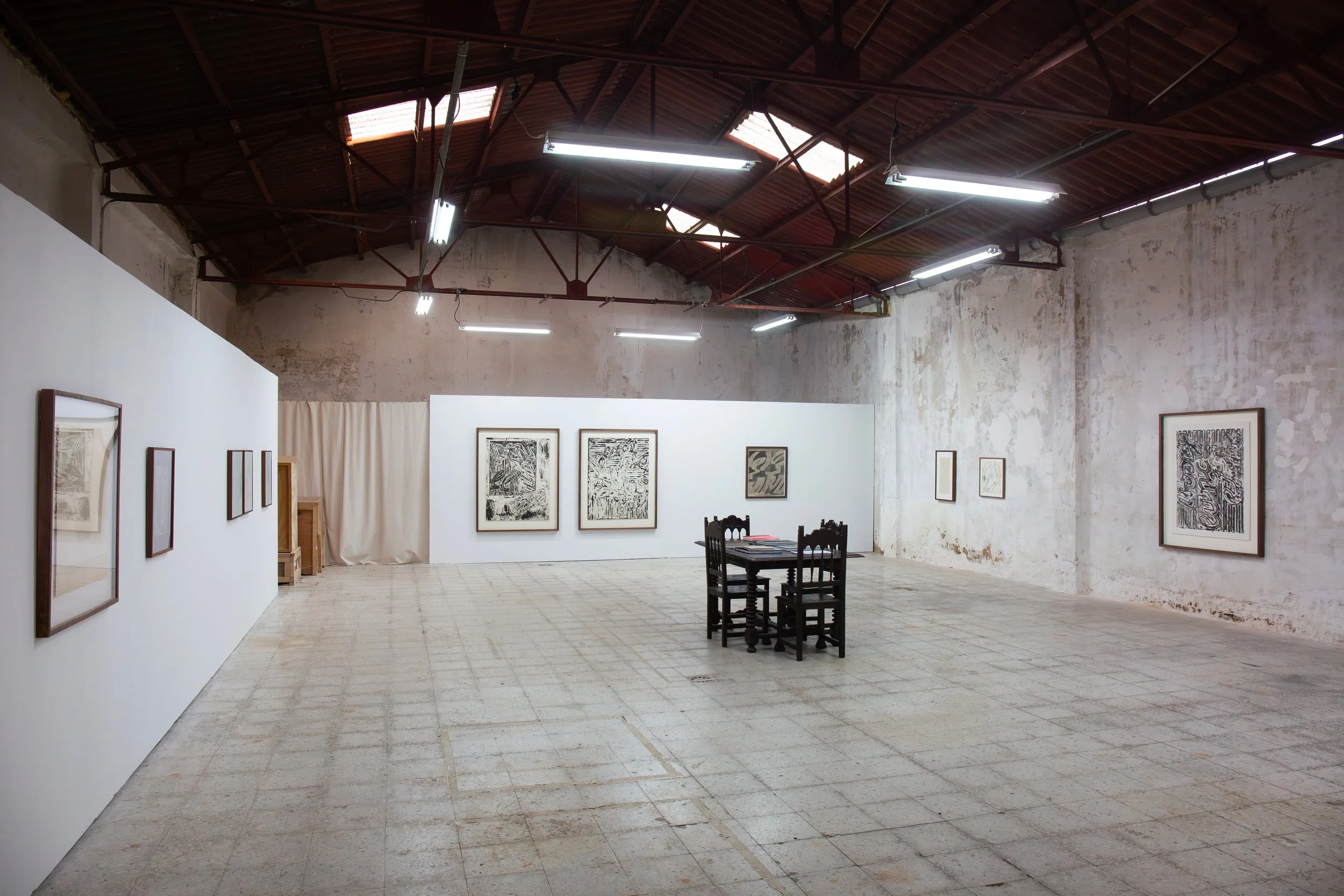
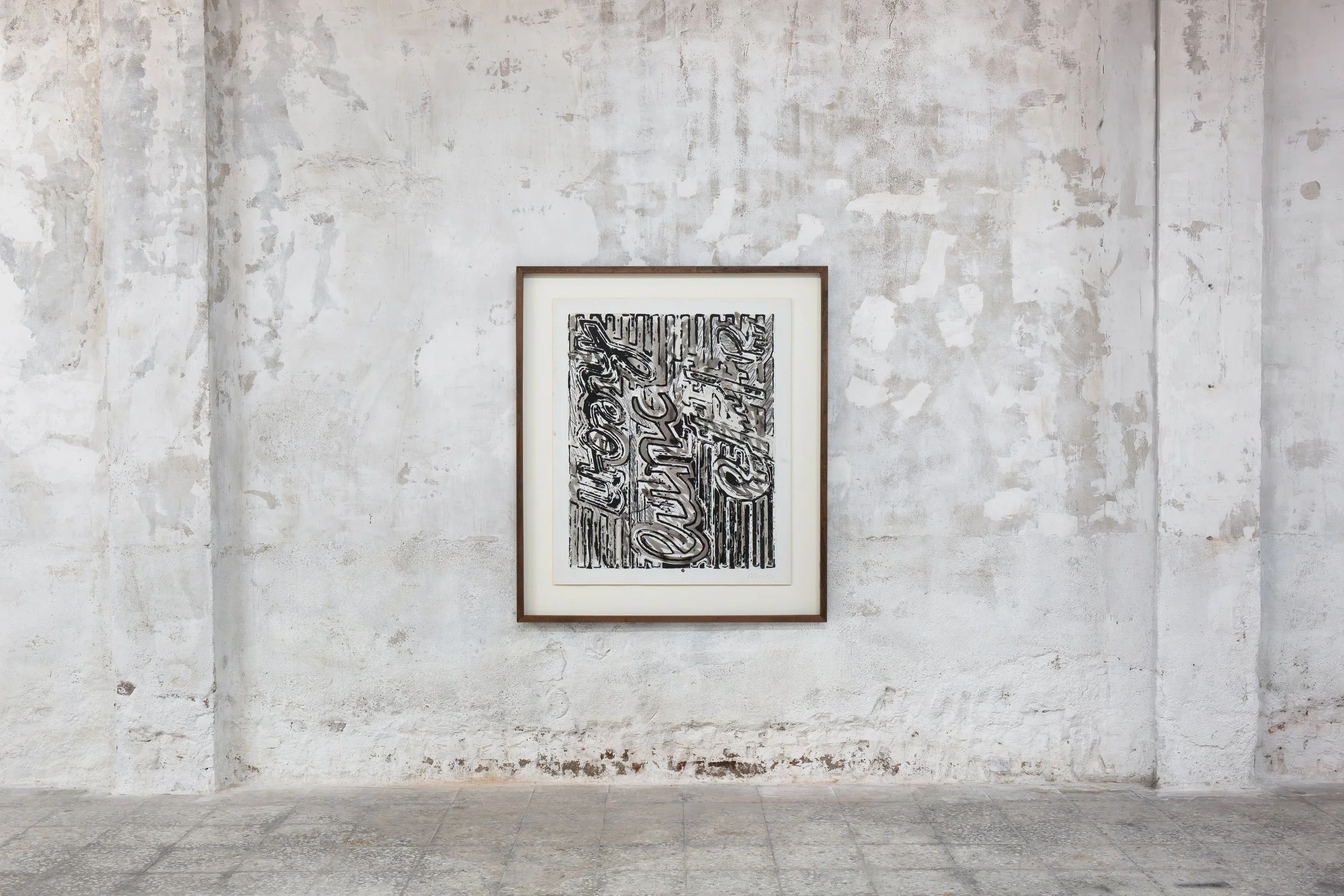
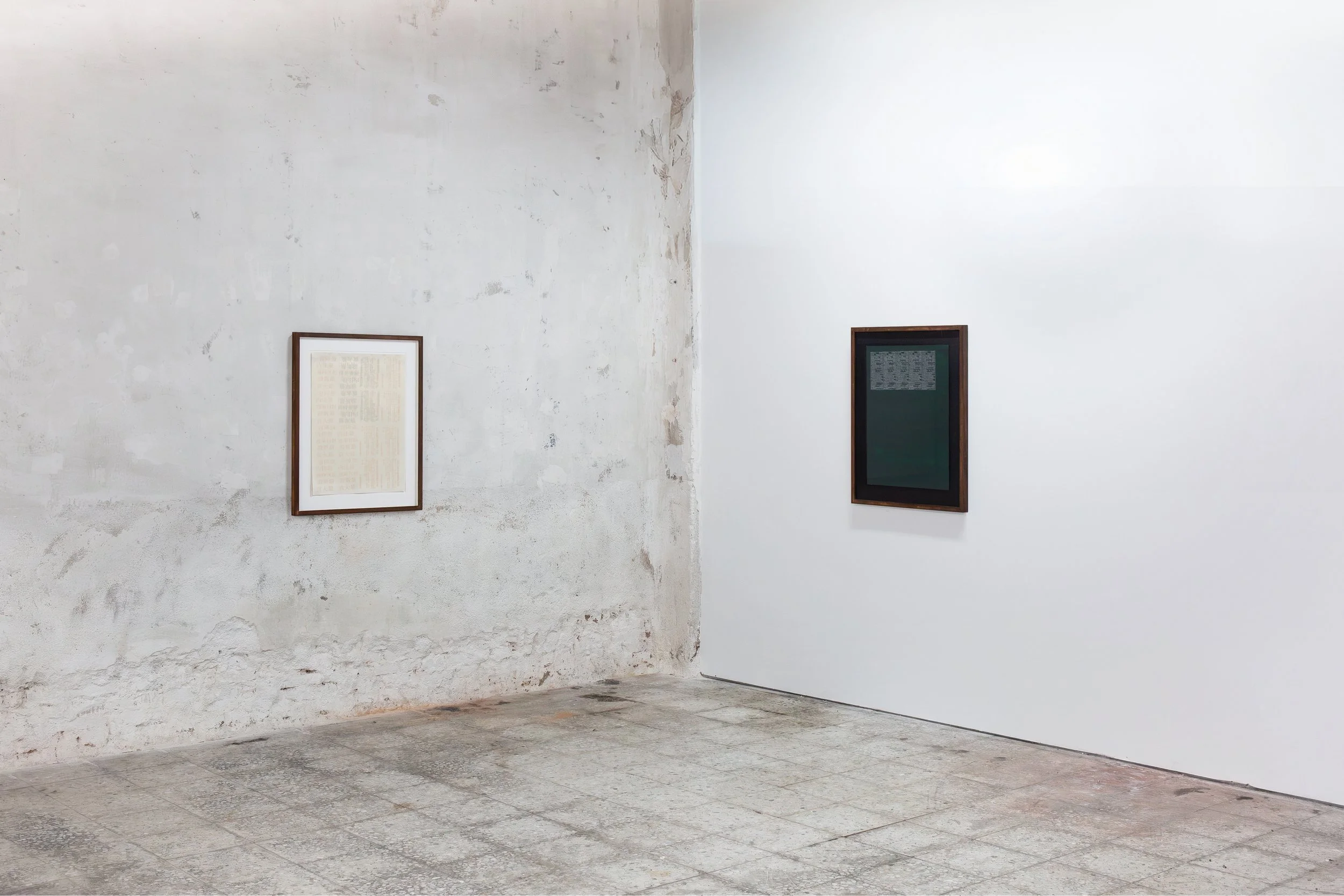
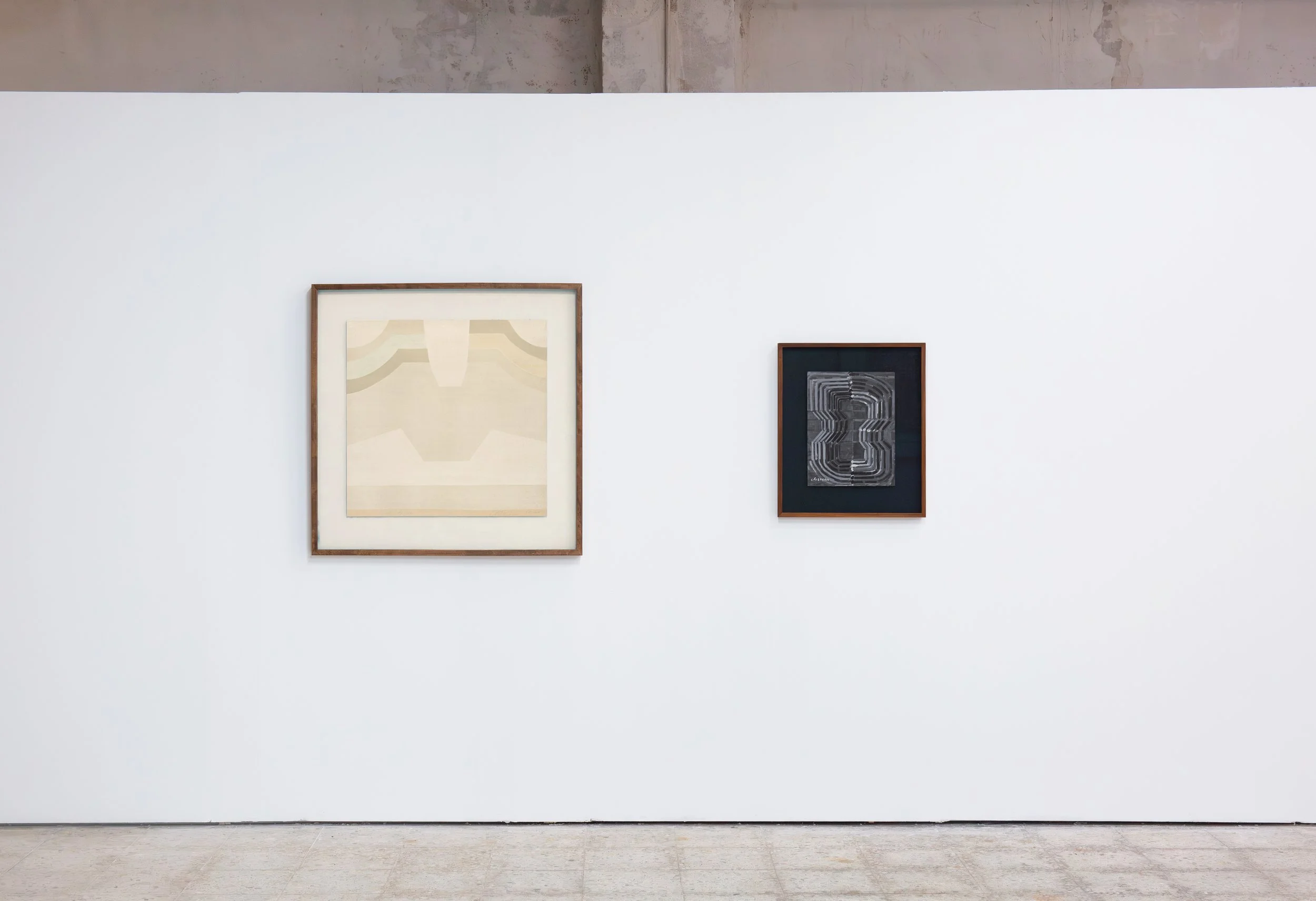
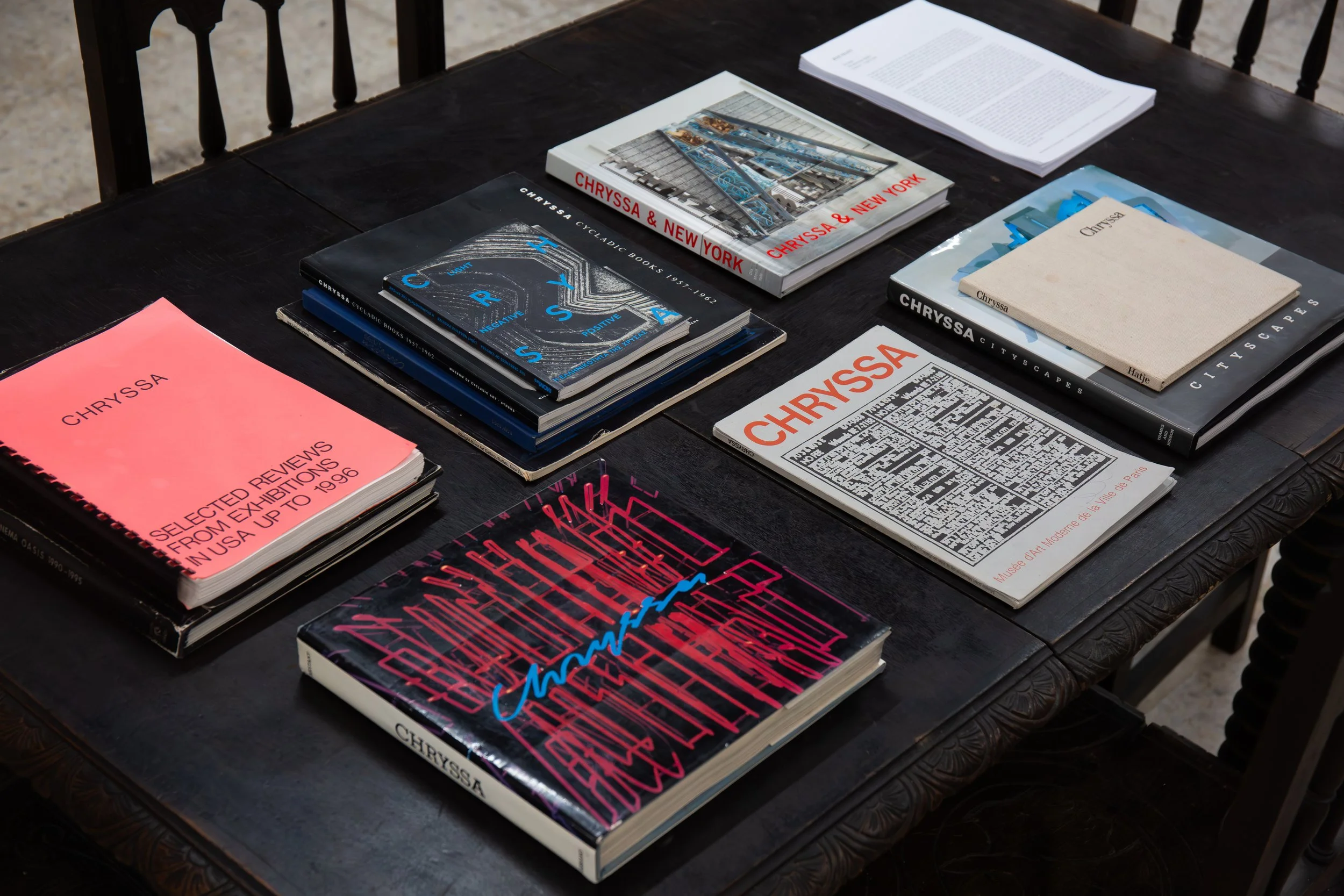
The design and functionality of the neon lights that contributed to the fame of Times Square—on signs set in vast, eye-catching typography—were a reflection of the human body’s behavior in public space. The neon text was visually adapted so that it could be read by the moving body as it weaved its way through architecture and urban flows. The Greek artist Chryssa (1933–2013) arrived in New York in the early 1950s, and, stunned by the electric speech glaring out from the city’s façades and rooftops, she would go on to work for many years with this flashy symbol of the epicenter of entertainment. These lights were of such visual impact that they came to be referred to as “spectaculars.”
According to official accounts, contemporary sculpture began to shift away from figuration in the 1950s, a rejection that intensified over the following decade. As David Getsy explains in Abstract Bodies (2015), this emerging abstract sculpture was no longer representational, but many works continued to allude to human presence and bodily experience. Chryssa herself suggested that her neon typographic sculptures were concerned less with the anatomical abstraction of the body than with its functioning.
By associating bodily functioning with the “spectaculars,” the artist highlights the performative quality of both, bringing into relation the relative invisibility of mid-century lesbian engagement in public life and the visual impact and velocity of urban signage—the iconic expression of the modern Western city. Chryssa’s typographies seem to condense the accumulation of gestures through which women give each other meaning in the epicenters of urban life. Unlike gay men, who often had broader networks of refuges beyond private space (bathhouses, tearooms, gay porn cinemas, brunch clubs, cruising sites, and so on), the gestures Chryssa points to concern bodies moving around the city, with no institutions to shelter them or register their possible meanings.
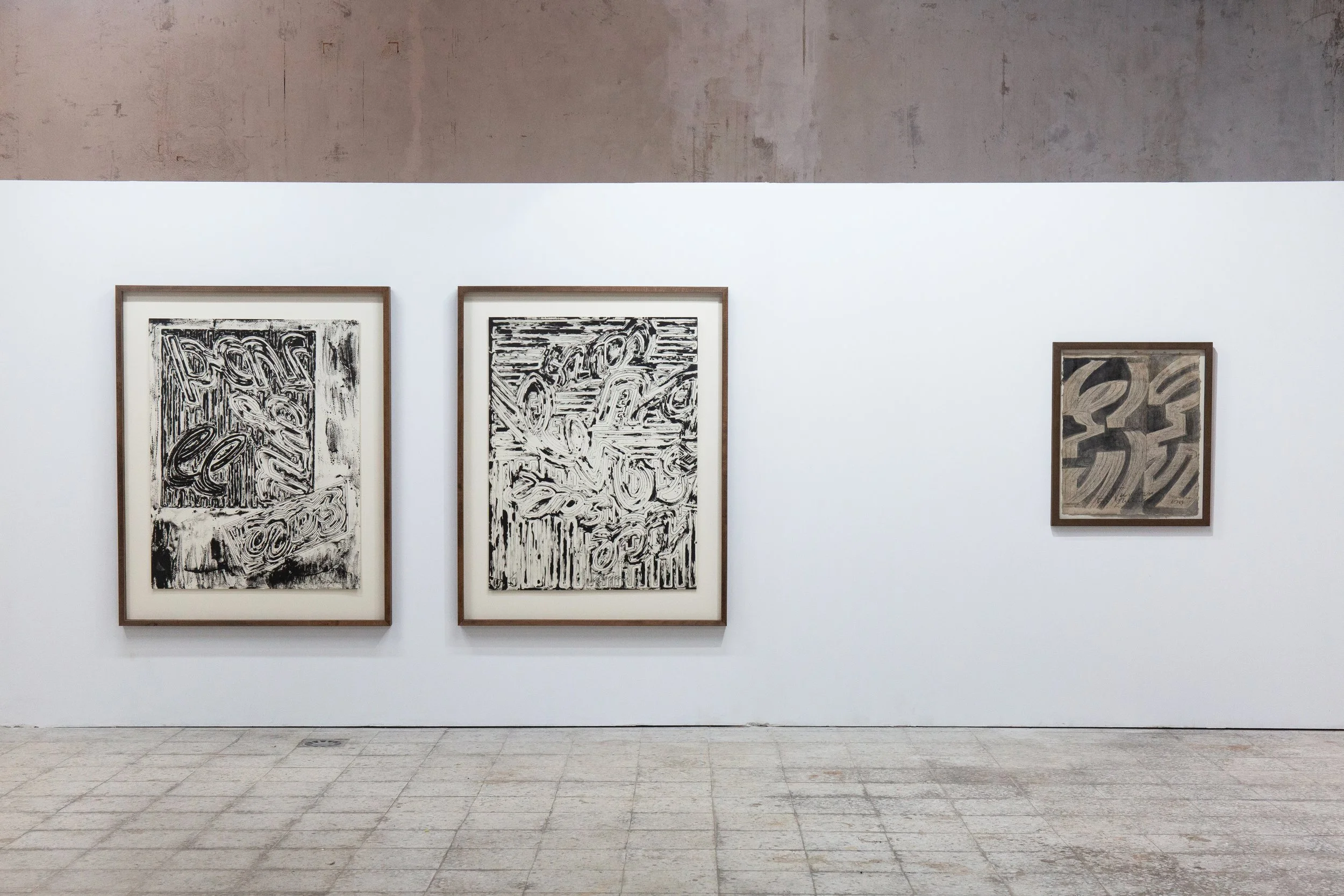
Chryssa’s works on paper approach the page as if it were a public space, encouraging the work to be read as a pedestrian might read Times Square. Meaning is not revealed in a straight line sweeping from left to right, since there is no pre-imposed reading order: all the bits of language jostle for attention. These typographies want their shapes and colors to be felt, their communicative capacity extending far beyond the semantic meaning of words.
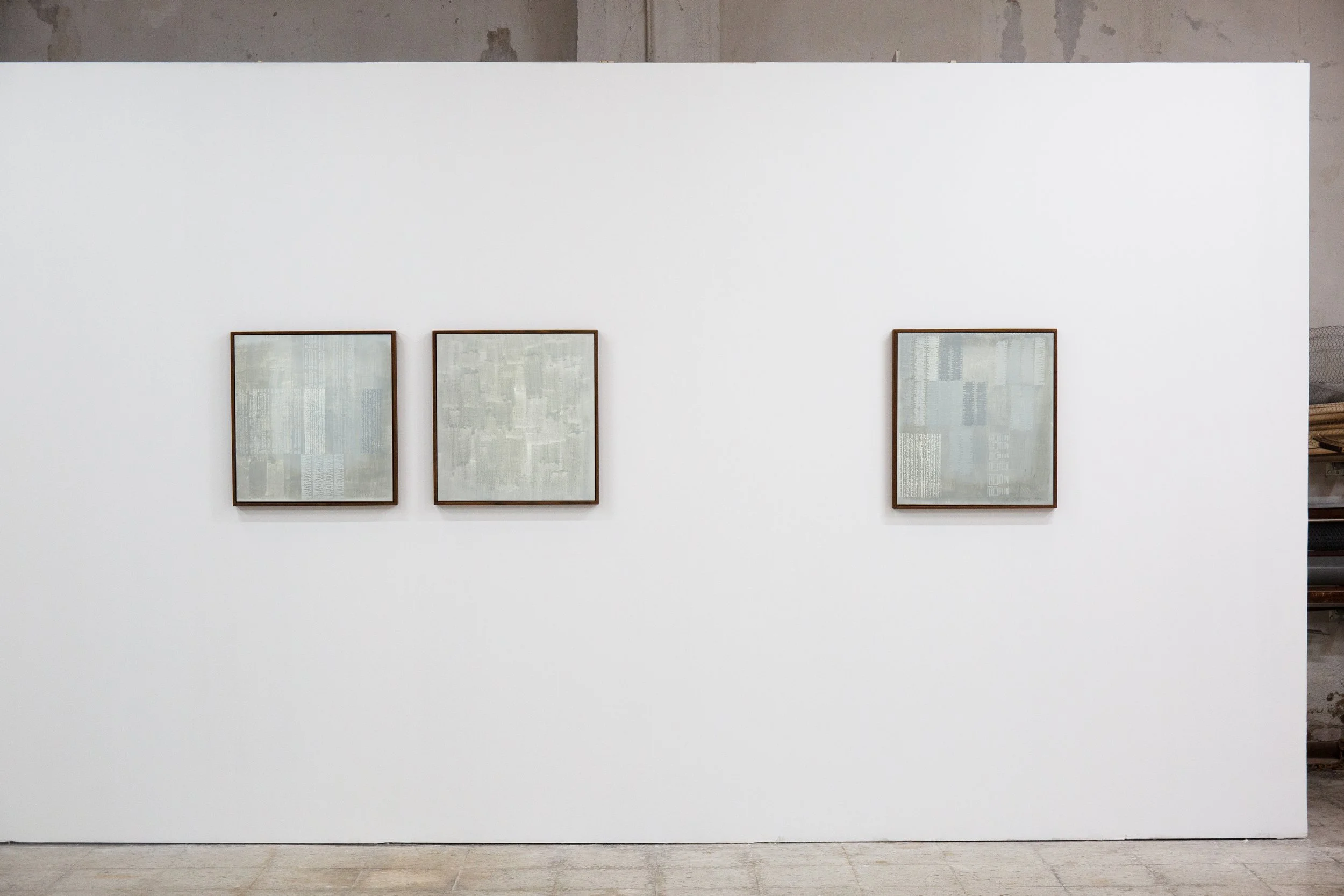
In works such as those comprising the series on paper Studies for Cityscapes (1958, 1960s) or Reality and Illusion (1972), the fluids of neon gases are foregrounded through color and luminosity trapped within the crystal casings of the tubes. The form and boldness of these typographies make them speak loud beyond words; they seem to drag movement, and, together with the way they are juxtaposed—some slanted forward to the right, others leaning back—they create a sense of velocity.
Chryssa infiltrates the machinery of modernist urbanism and the hard shell of minimalism, distilling commercial graphics to foreground form not as a fixed element but as an activity. The sense of movement in her approach to bodies and typography rejects the idea of form as static, producing instead a sensation of form as flow and of meaning as circulating rather than fixed.
The connotations beyond language evoked by her typographies are further stressed through the “junk aesthetics” of these works on paper, which relate to the artist’s sculptures made from found commercial materials scavenged from scrap yards. Their uneven applications of gray and black, visible scaffolding, and exposed structural supports draw attention to the material and industrial conditions underlying spectacle itself.
At the same time, these works point to the machinery through which modern visual regimes determine what becomes visible and what remains outside the field of vision. Certain experiences escape representation not because they are absent from the physical world, but because dominant perceptual and conceptual frameworks fail to register them—a particularly significant condition at a moment when no stable social or political framework existed to sustain an explicit articulation of lesbian performativity.
The advertisements found in Chryssa’s works on paper function as anchors through which the artist’s itineraries across the city can be imagined—kinetic journeys through urban architecture and flows of people. The never-before-exhibited series of prints titled American Atelier (1981–1990) likely refers to a twentieth-century workshop specializing in graphic editions, where artists such as Willem de Kooning, George Tooker, and Chryssa herself commissioned works.
Other words—Sale, Cars, Ice, or Luncheonette—invoke everyday consumption, pointing toward affordable goods and routines embedded in daily urban life. Chryssa grew up amid the Nazi occupation of Greece, and her entry into adolescence was marked by this circumstance, during which she recalled seeing cryptic messages scrawled on walls by the underground resistance. Written in the middle of the night, these messages were read quickly by those who ventured out before the enemy could erase them. As with the time-sensitive and insider knowledge required to decipher such inscriptions, Chryssa’s work leaves its meanings partially withheld, accessible above all to those capable of recognizing the experiences from which they emerge.
Ironically, the spectacular intensity of neon can eclipse its linguistic meaning, yet Chryssa mobilizes this very collateral effect to foreground what bubbles beneath language. Artist Tiona Nekkia McClodden describes Chryssa’s work as a “denial of language within the structure of Times Square.” Reflecting on the Greek artist’s practice and her relationships with other women, such as the painter Agnes Martin, McClodden suggests that we are deeply concerned with naming love, while asking “what is lost in this naming and fixing.”
If Chryssa’s work evokes lesbian performativity and love in the urban center, it does so in a way that simultaneously deflects, reroutes, and complicates the viewer’s attempt to index or impose a fixed meaning. Chryssa performs a form of camouflage within a hypervisual environment—a kind of “spectacular opacity.” She points toward condensed gestures and movements in public space while resisting their translation into stable registers. Her neons suggest uses of public space that remain opaque to others: forms of relational participation that are little suspected or blurred within the collective imaginary, and that can therefore, however precariously, hide in plain sight.
– Leto Ybarra
Leto Ybarra is a curator, writer, and sometimes poet. With Bea Ortega Botas, she runs the project Juf.
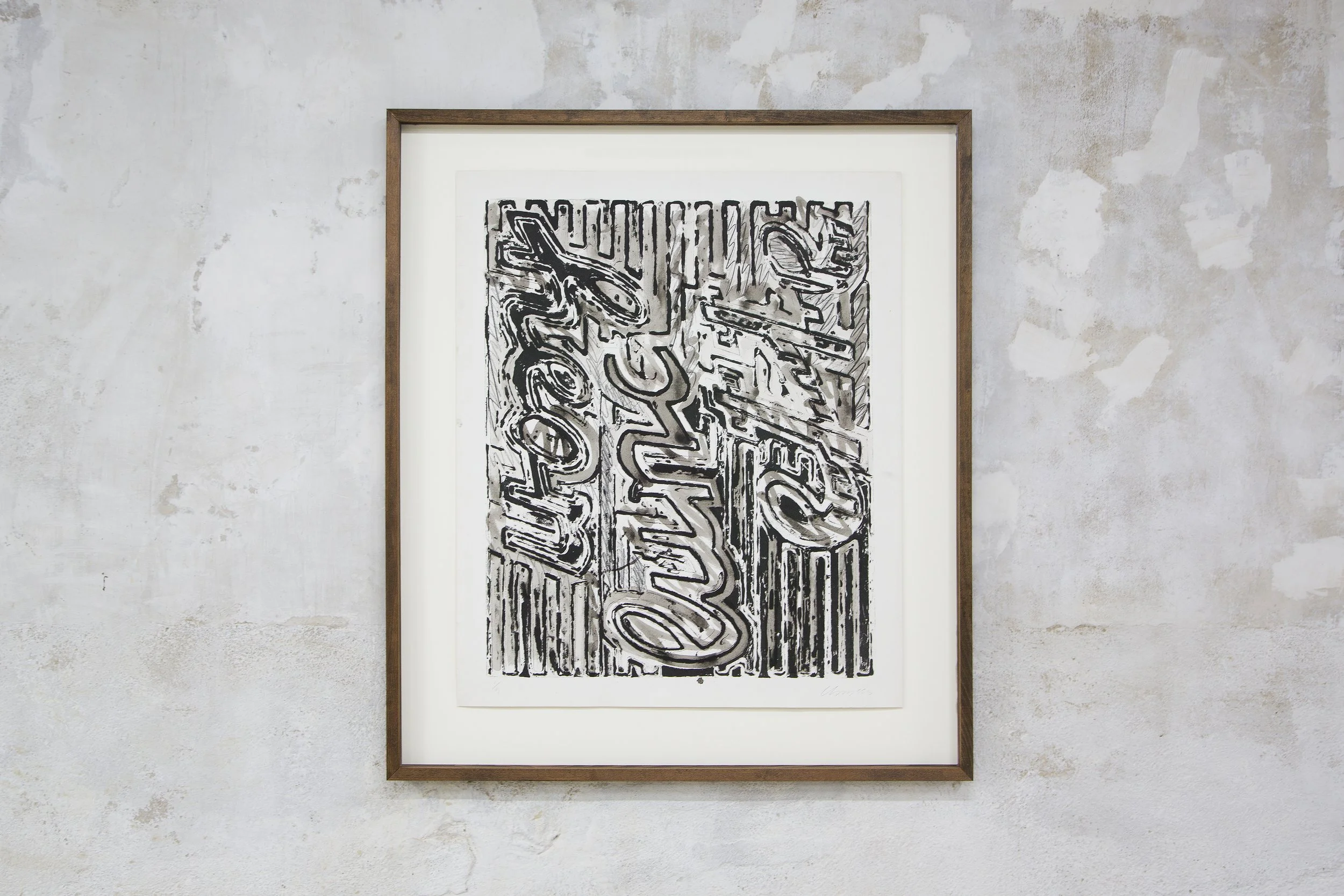
Chryssa The American Atelier (Luncheonette), 1981 - 1990 Lithograph and graphite on paper 113.5 x 94.5 cm (unframed)
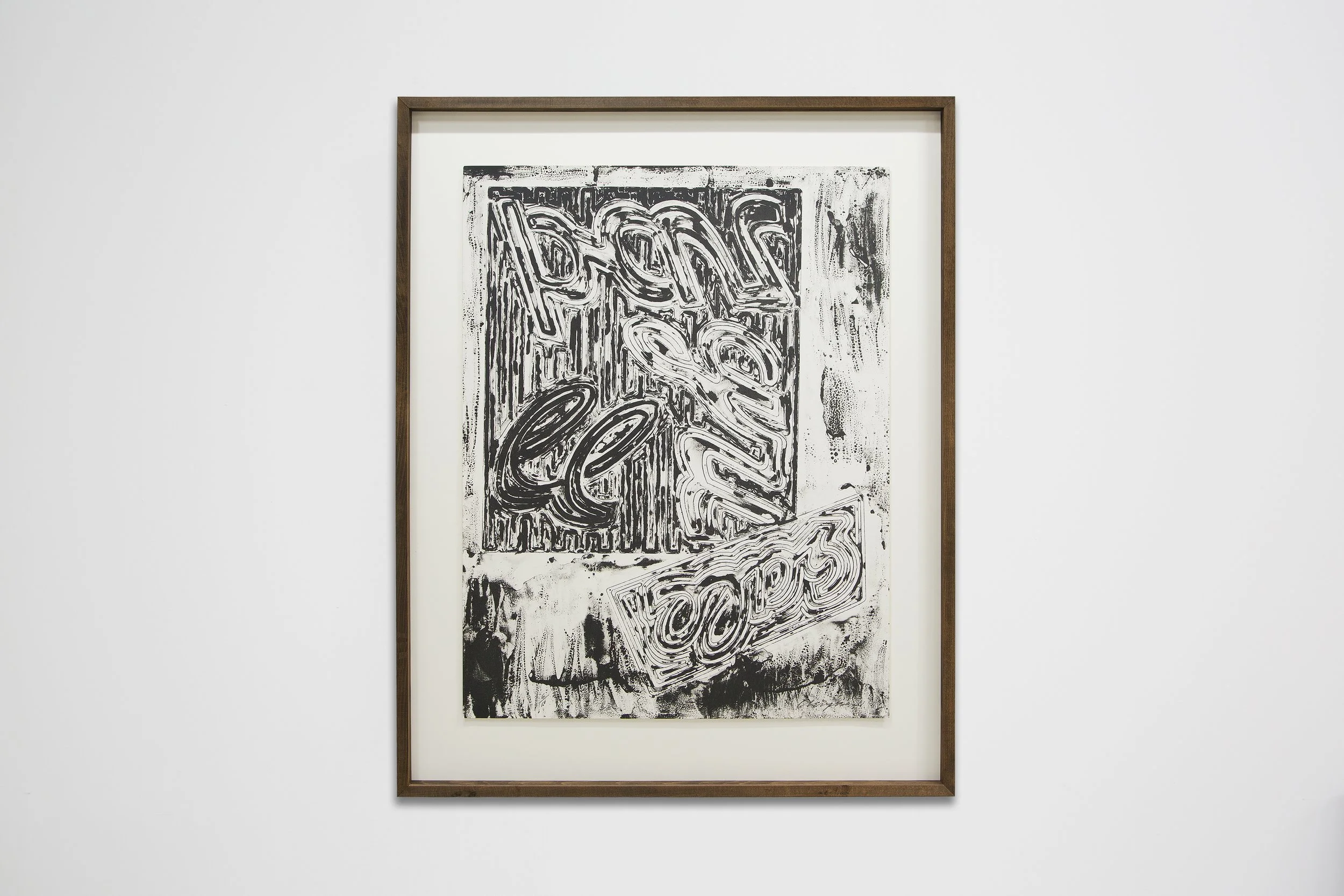
Chryssa The American Atelier (Sale, Bar, Grill), 1981 - 1990 Lithograph on paper 123 x 95 cm (unframed)
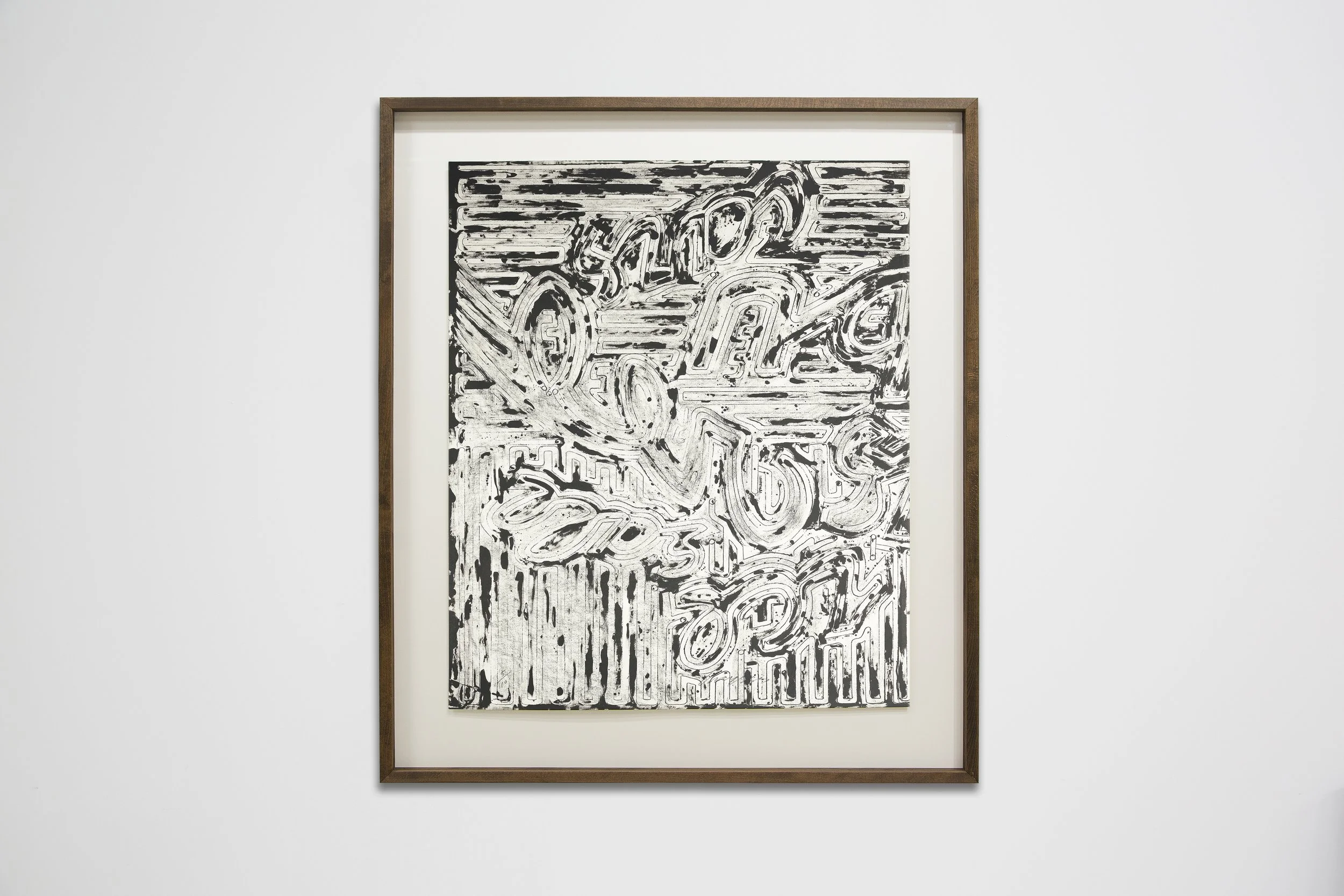
Chryssa The American Atelier (Sale, Cars, Ice), 1981 - 1990 Lithograph on paper 125 x 95 cm (unframed)
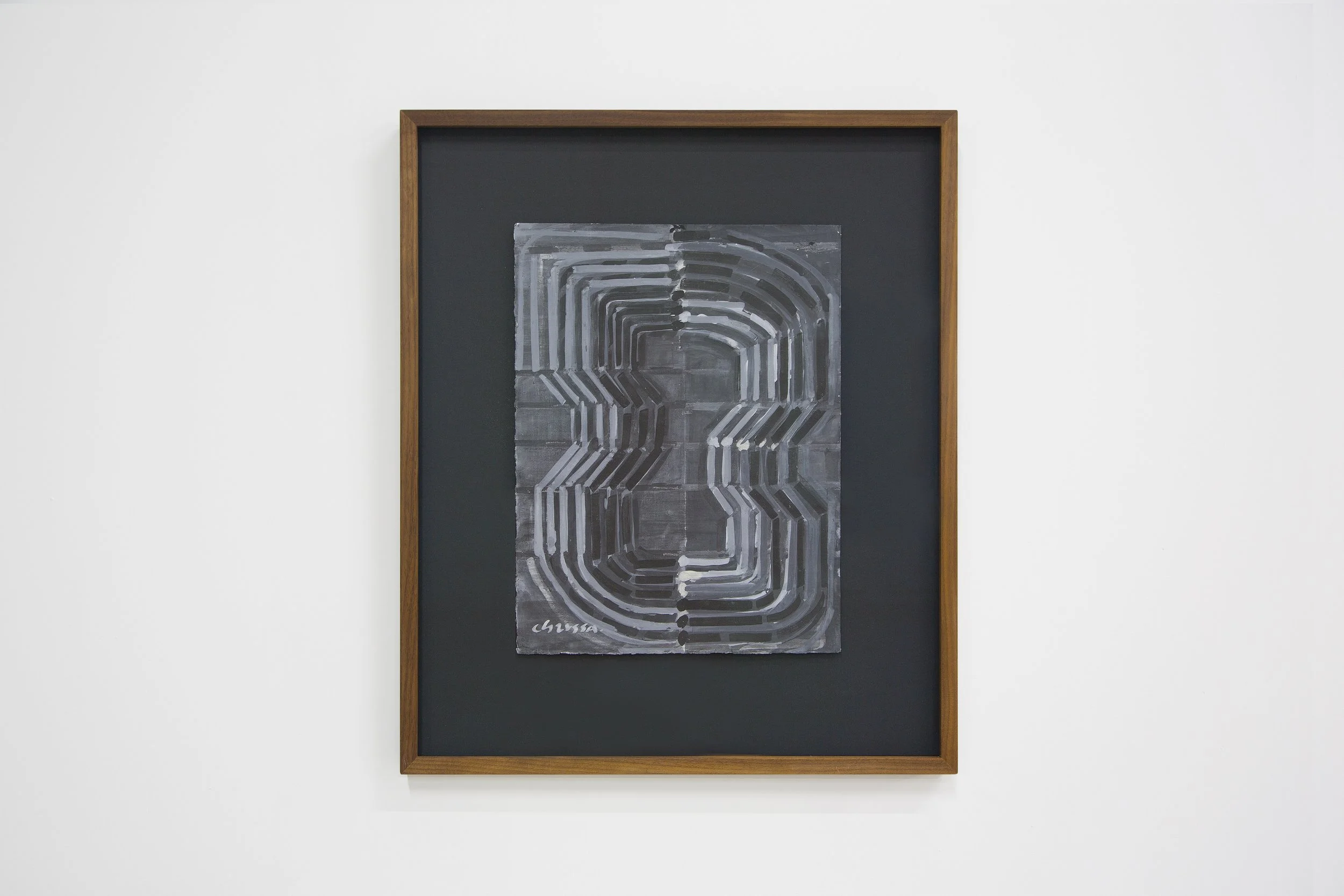
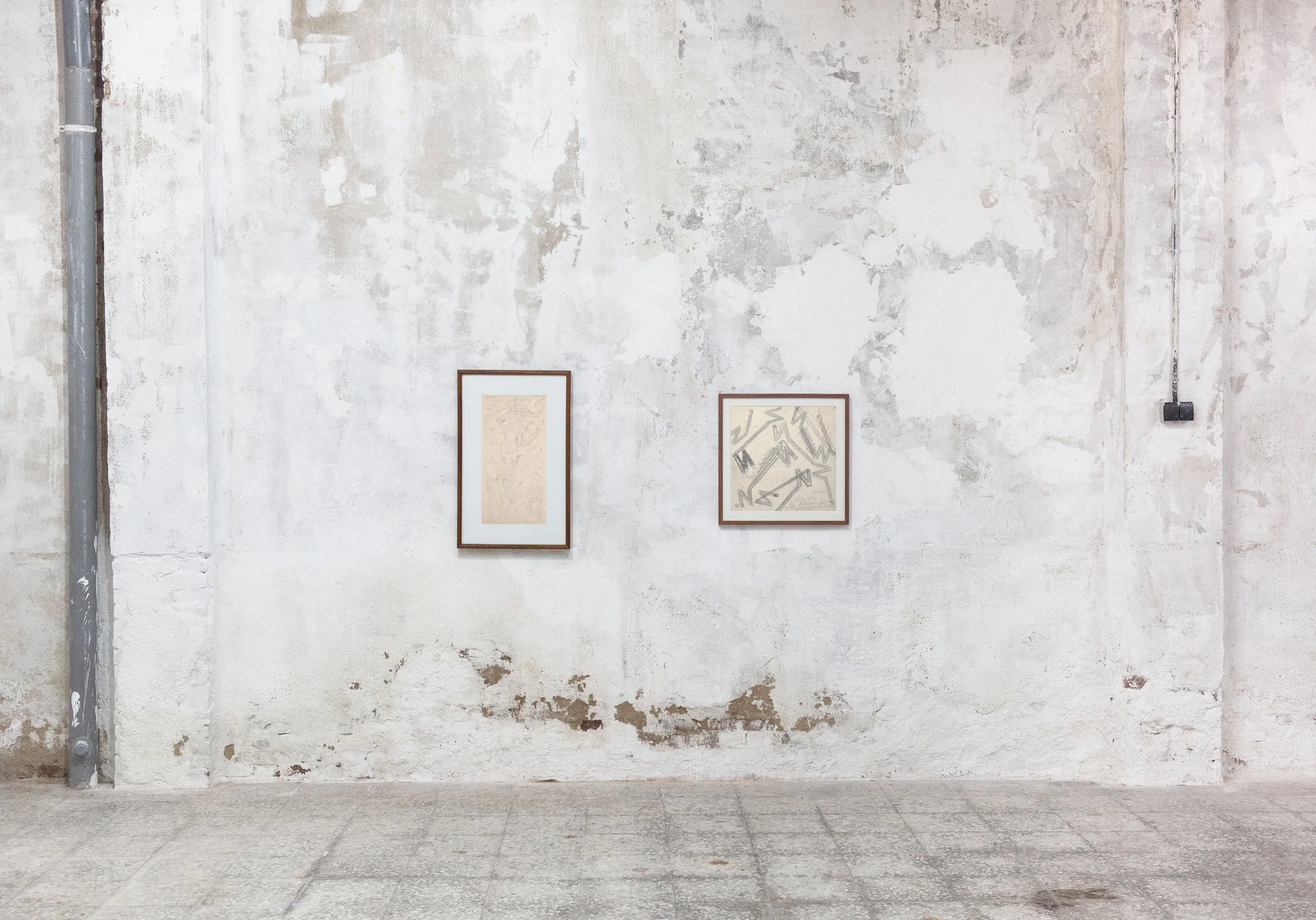
Chryssa Clytemnestra, 1971 Gouache on wove paper 38.5 x 29.5 cm (unframed)
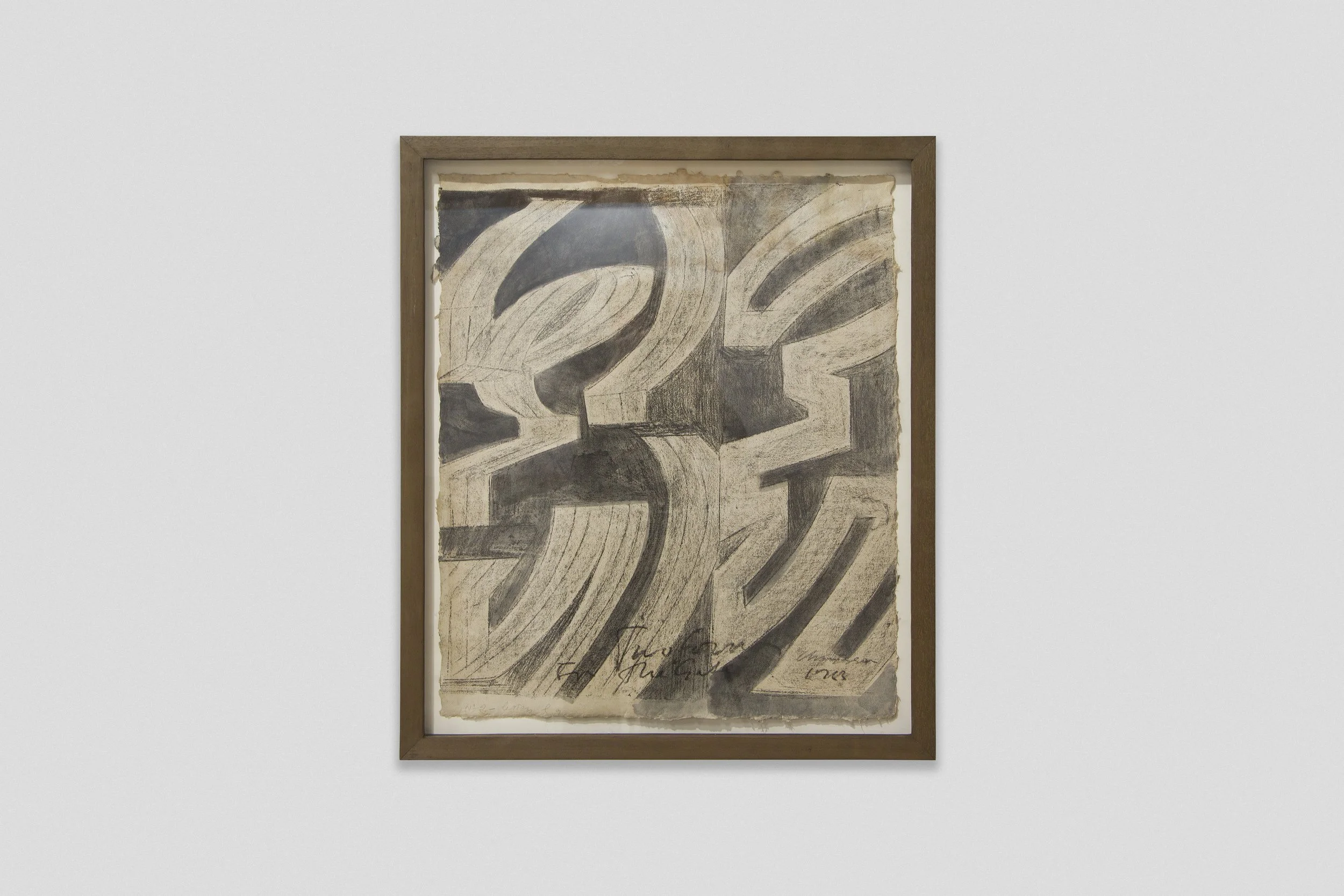
Chryssa Two Forms For The Gate, 1963 Charcoal and Indian ink on paper 73 x 62 cm (unframed)
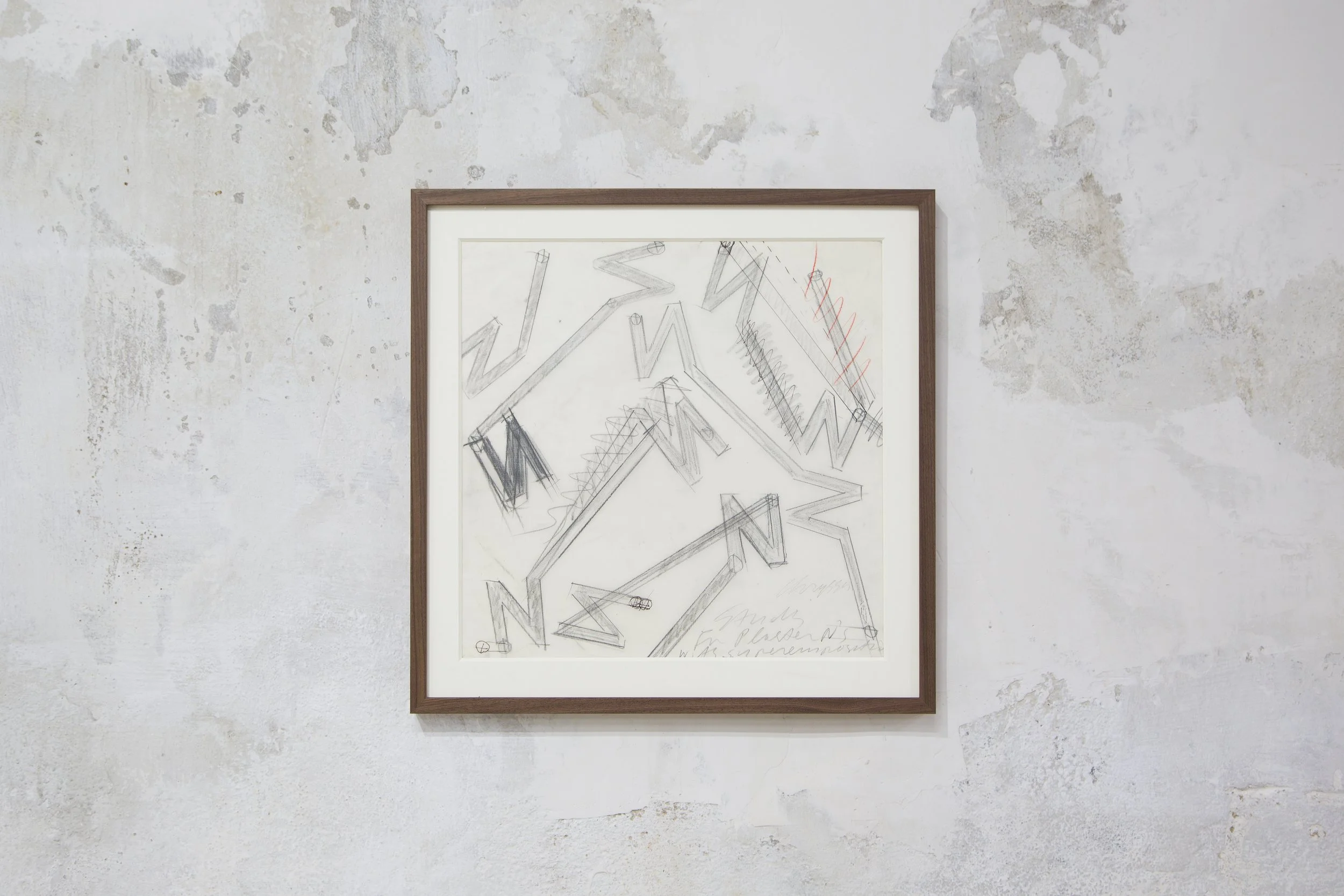
Chryssa Study for Plaster N's, ca. 1969 Graphite and crayon on transparent paper 44.5 x 45 cm (unframed)