COURTESY
with Vikky Alexander, Geoffrey Bennison, Christian Bérard, Dike Blair, Mario Buatta, Jane Dickson, Christopher Gambino, Joseph Geagan, Mark Hampton, Arthur Marie, Alexandre Serebriakoff, Marius Steiger, Elsie de Wolfe
21 February — 4 April 2026
curated by Pierre-Alexandre Mateos
COURTESY
Curated by Pierre-Alexandre Mateos
with Vikky Alexander, Geoffrey Bennison, Christian Bérard, Dike Blair, Mario Buatta, Jane Dickson, Christopher Gambino, Joseph Geagan, Mark Hampton, Arthur Marie, Alexandre Serebriakoff, Marius Steiger and Elsie de Wolfe
Time spent on elegance is never wasted.
During the fall of 2025, the White House treated itself to a monarchical facelift: the East Wing was partially demolished to make way for a vast neoclassical ballroom, financed by private donors and presented as a necessary modernization. The Washington Post and Reuters relayed the criticism: historians, architects, and conservation commissions denounced the hasty transformation of a democratic symbol into a decadent architecture of leisure.
Courtesy questions the politics of elegance, the social rituals through which power is staged. Bringing together paintings, photographs, furniture, decorative arts and printed matter, the exhibition considers decor not as a neutral backdrop, but as an active instrument of sovereignty, persuasion, and symbolic control.
The term "courtesy" is not anecdotal. It conveys politeness, but also sustains the implicit authorization "by courtesy of." As such, it grants access while reminding us of our debt. It allows entrance without ever abolishing hierarchy. It presents itself as generosity, while structuring dependence. In the vocabulary of galleries, "courtesy of" indicates provenance, ownership, belonging. Courtesy is therefore not neutrality; it is the elegant management of asymmetry.
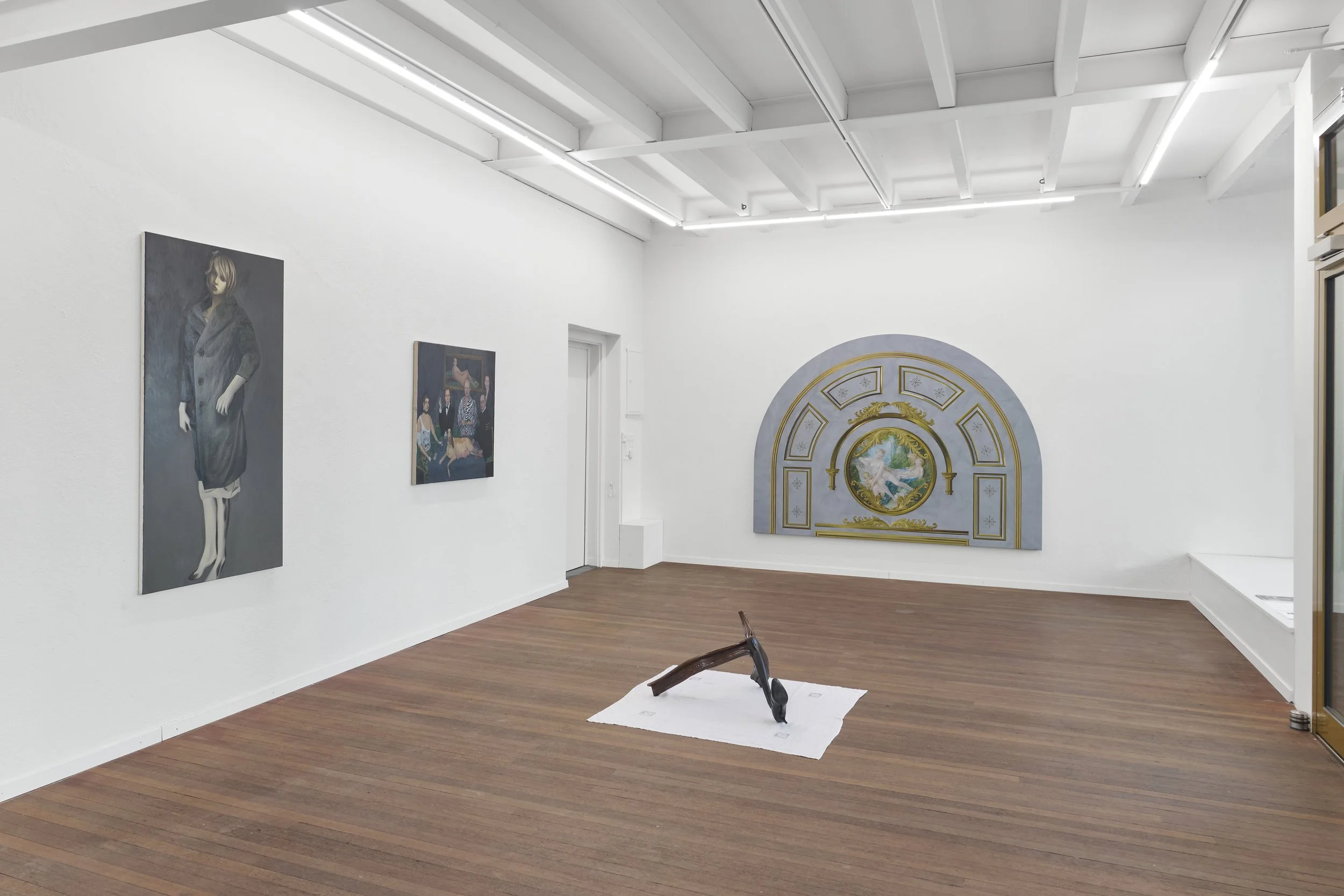
Marius Steiger's Consoling Love (2025) is a neoclassical Louis XVI arch, adorned with gilding. A standard of pompous imagery, this reproduction of François Boucher's Venus Consoling Love (1751), a Rococo painting commissioned by Madame de Pompadour and depicting Venus and her two cupids, dominates the exhibition with its impudence. It evokes the kitsch of the Trump’s ‘80s era, when the Yuppie scene bought cultural legitimacy from gay decorators.
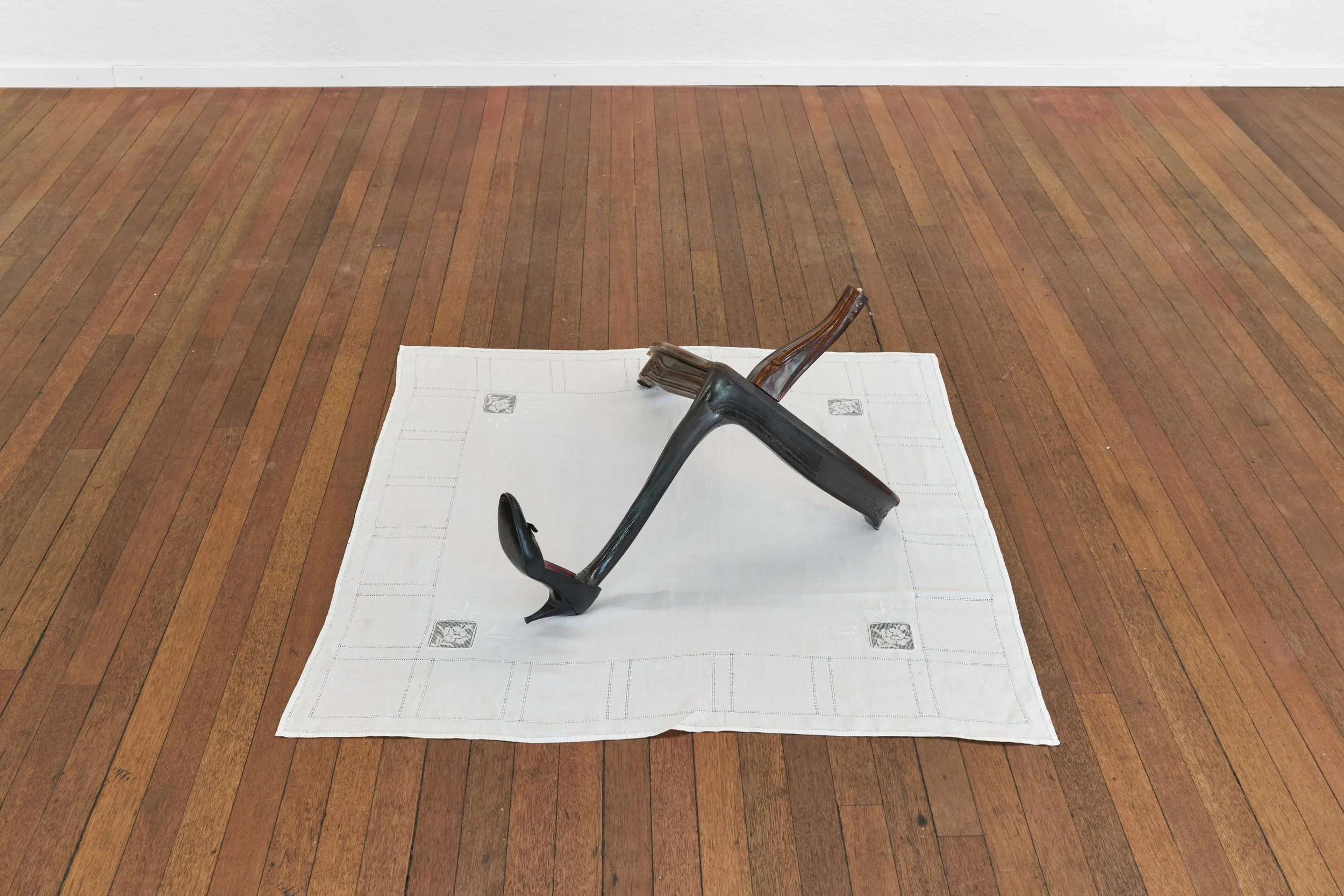
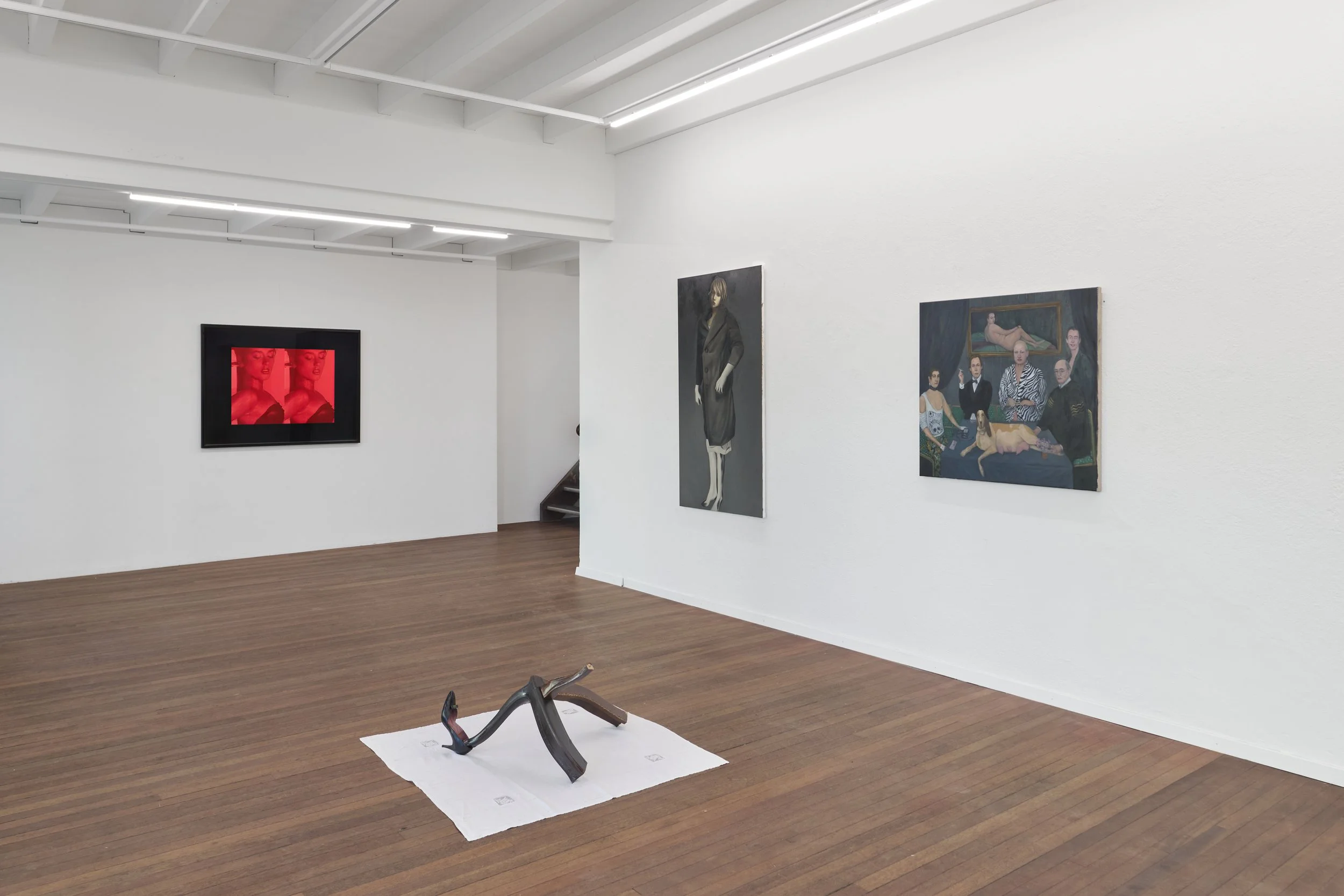
In contrast, Christopher Gambino presents the installation Famous Vivian (2026), built from Regency furniture, broken, smashed, and mutilated. Collecting objects from the streets of New York, the artist reassembles debris and scraps as a gesture of resistance to bourgeois order and its moral simulacra. In the tradition of junk art, he subverts the viewer's gaze, which is objectified by a hostile device. While Regency style exudes decadence, reflecting the reign of George IV, Victorian furniture signals a return to disciplined order. In the 1980s, these styles converged in a syncretism that laid bare bourgeois anxieties. These artificially neo-Victorian pieces of furniture are not saved. They are left to their own decline.
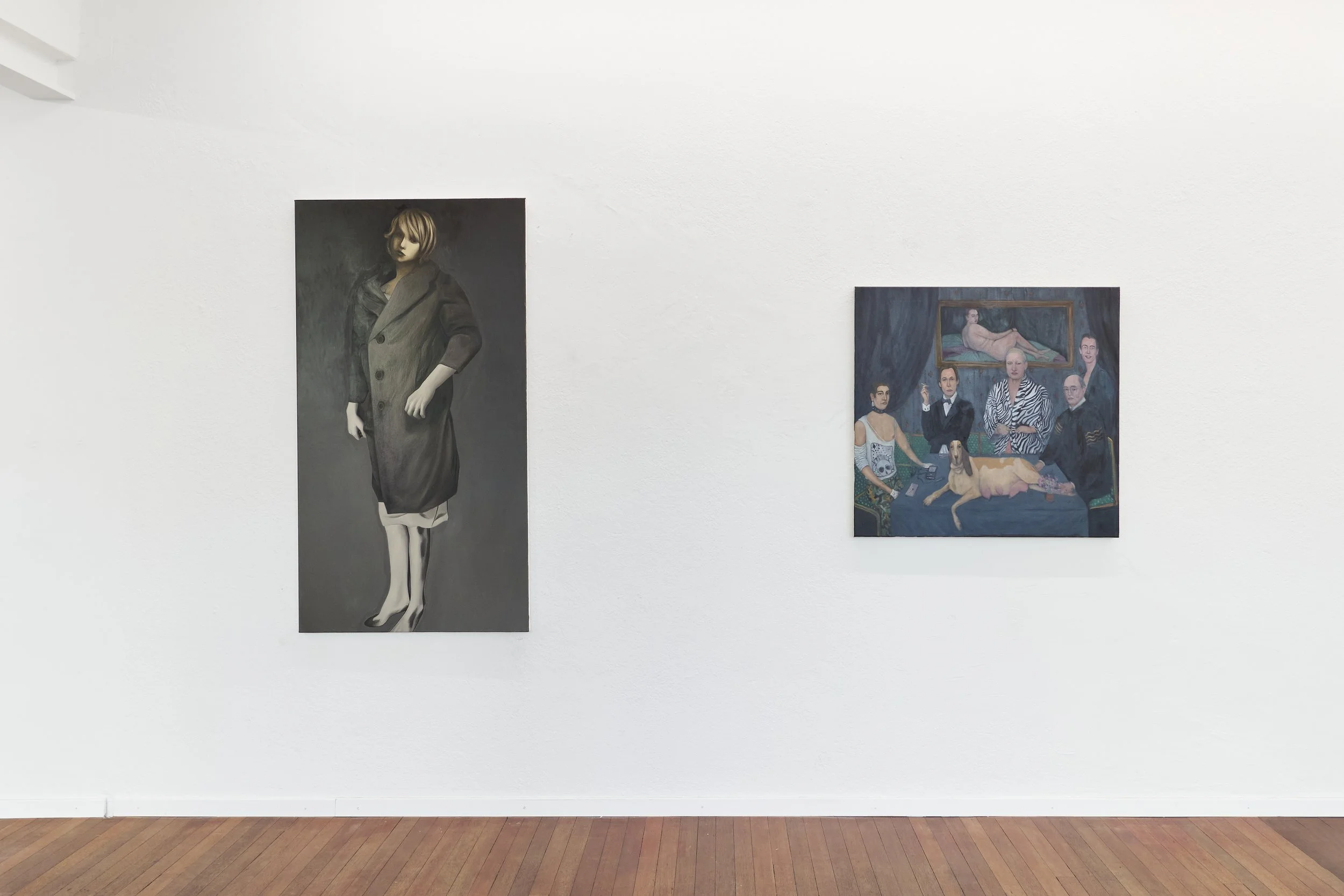
Joseph Geagan's painting is inspired by Frans Hals' Regentesses of the Old Men's Almshouse (1664), a painting from the Dutch Golden Age, the founding moment of Protestant mercantile capitalism, when images became both instruments of civic prestige and objects of circulation. The painting replaces Hals' regents with effeminate men. Camp and cold irony. This gay mafia is inspired by several characters: Montgomery Clift (1920-1966), Rock Hudson (1925-1985), both closeted gay men, and Republican Supreme Court Chief Justice William Rehnquist (1986-2011), famous for voting against LGBT rights. The man in the tuxedo evokes the frail silhouette of St. Genois D’Anneaucourt (1927) by Christian Schad (1894–1982), reflecting the style of the New Objectivity. Then the painting within the painting: Robert Sherer's New Male Nudes (1995), which caused moral and homophobic panic, even censorship, at the South Carolina Museum where it was first shown. His old-money characters could be members of the Jonathan Club (L.A.), and surely Gore Vidal would have made a beautiful, deviant portrait of them. Hollywood Babylon.
Arthur Marie, after meticulous research, paints the portrait of a trans woman murdered in the 1930s. A ghost among ghosts, she is autopsied from the perspective of Bertillonage, a forensic identification technique named after one of the inventors of police photography. This livid figure, probably naked under her cashmere armor, evokes a Freudian interpretation of Sacher-Masoch. The lifeless body regains its white splendor, as references abound to the mundane paintings of Boldini, who portrayed Parisian high society in anachronistic, even cruel poses. His slender female character is also reminiscent of Heather Mason from the video game Silent Hill III (2003). It is in this collage of 1900s pictorialism, crime story, and digital silhouette that a canon emerges, that of the elegant woman of high society, carnal yet somewhat already dead.
Vikky Alexander's Pictures Generation photographs (Magenta, St. Sebastian, 1985 & Between Dreaming and Living #8, 1986) reproduce the art of doubling, of opaque surfaces, of seductive window dressing, of advertising aesthetics and soft eroticism through which icons dissolve under the male gaze. Her works appeared at the dawn of Reagan’s virile and triumphant America. They act as ironic counterpoints, media viruses inoculated into the very system they denounce. Femininity is a performance, a romanticism of money, a living currency, staged and spectacular.
This absorption of the feminine did not arise ex nihilo. It is part of a longer genealogy. Contrary to the heroic narrative of the American avant-garde (Pollock, De Kooning, Krasner), another modernity runs through the 20th century. Their aesthetic is not a simple "return": it is a formal conservatism that draws on the same circuits as avant-garde art, but via a different engine: inherited philanthropy, industrial fortunes, high-society collecting, and the structural proximity between salons, museums, couture, and the press.
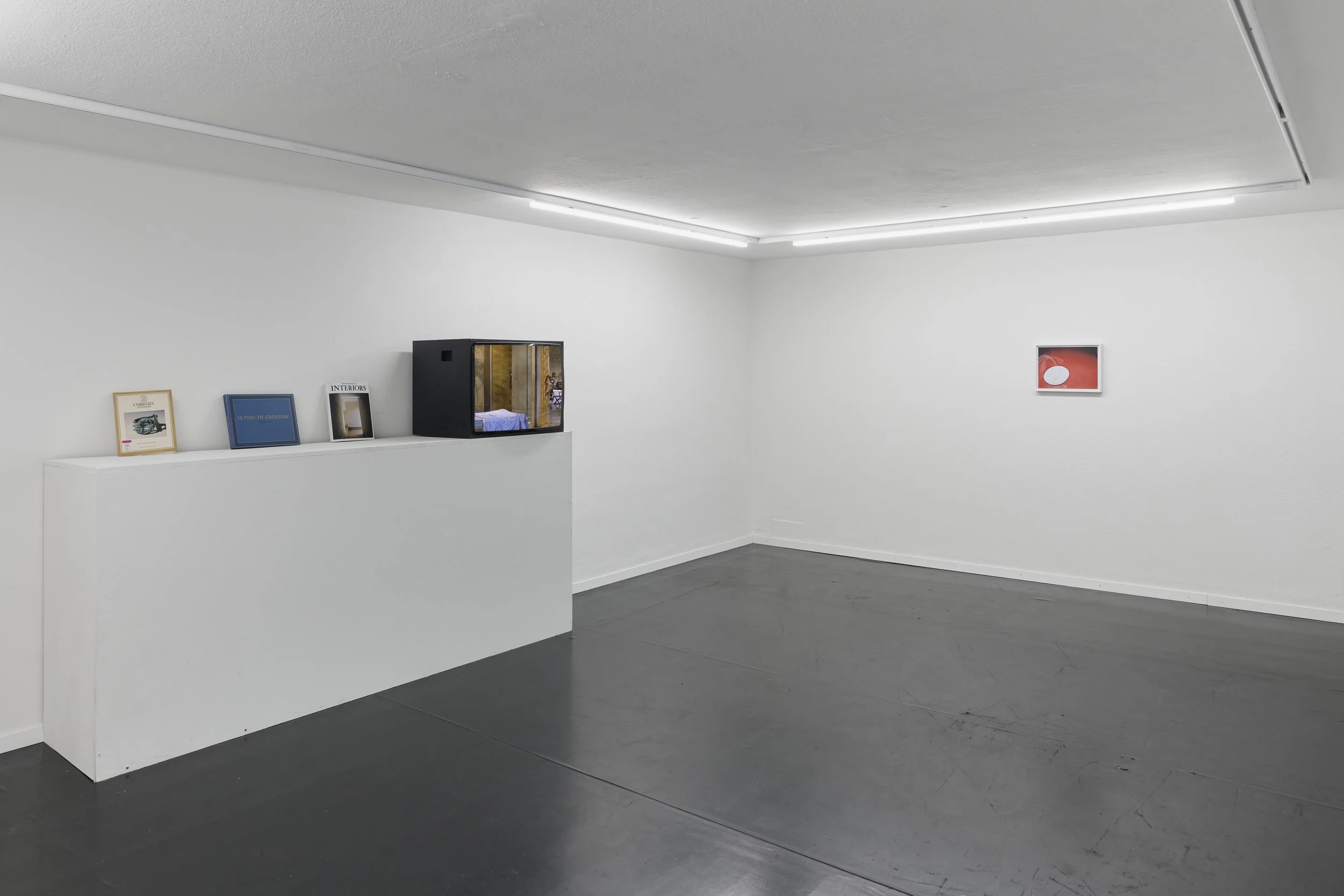
Alexandre Serebriakoff (1907–1995), trained in the shadow of the dying Tsarist Russia and forced into exile after the Revolution, never painted innocent interiors. His watercolors depict aristocratic salons as silent political treatises. In his work, every armchair has its place. His collaborations with Charles de Beistegui (1895-1970) at the Château de Groussay, and with Alexis de Redé (1922-2004) at the Hôtel Lambert, inscribed his work in a culture of decor as the active reconstruction of a world lost but never abandoned. The famous architectural follies of Groussay are not simply a matter of social whim: they constitute an imaginary resistance to functionalist modernity. Celebrated by Cocteau, the exotic follies of the Château de Groussay are part of an exuberant vision of the English garden. Pastiche becomes a program.
Christian Bérard (1902-1949), nicknamed "Bébé," was one of the most influential figures of the interwar period, a watercolorist, illustrator for Vogue and Harper's Bazaar, and interior designer with a rustic appearance and childlike smile. He was ostracized by avant-garde circles for his proximity to café society. Courtesy presents a humble photolithograph entitled Homme au manteau rouge (Man in a Red Coat), depicting a man in an indoor cape and red dressing gown, whose flowing drape evokes operatic drama. This heavy coat, which seems to come straight out of Whistler's imagination, with its outdated 19th-century dandyism, perfectly expresses Bérard's sociological, detached, and atmospheric gaze. According to gossip, Bérard gave off an unpleasant odor. Yet he inspired admiration and kindness. In 2022, publisher and curator Patrick Mauriès dedicated a retrospective exhibition to him at the Villa Paloma, in collaboration with American artist Nick Mauss, contributing to his rehabilitation.
From melancholic dandyism to the deliberate engineering of taste, Elsie de Wolfe (1865-1950) stands as a guiding figure. Lady Mendl to her friends, she imposed with her delicate silhouette a more orderly and Apollonian style on the interiors of the European and American bourgeoisie. Any intrusion by a client in her decisions resulted in additional fees. Suspected of sapphic orgies, she lived in a Versailles house, the Petit Trianon, which had been commissioned by Louis XV. It is said that she organized exuberant balls and frivolous salons before leaving for Beverly Hills, where she would dominate American good taste. Her legendary personality and fleeting appearances made her the absolute icon of tastemaking in the 20th century. An issue of Architectural Digest, of which she was one of the muses, praised her refined Marie Antoinette style. After all...
These three figures show how elegance becomes an exportable social infrastructure, from the court to cultural capital. To understand what is woven between the stereotype of the closeted gay interior designer and a political class that runs counter to their interests requires diving back into the heart of the 1980s and its bellicose neoliberalism. AIDS was raging, and by 1984, the cultural milieu had been hit hard, with the tragic epidemic decimating a generation and bringing shame upon sexual minorities suspected of uninhibited hedonism. Among them was Geoffrey Bennison (1921-1984), an interior decorator whose Christie's catalogues are presented in the exhibition. Bennison came from a modest English background and rose to the ranks of high society and conservative political circles. As the arbiter of their interiors, in the style of 18th-century Georgian design, he became known for his muted palette, thus acting as a mediator between the respectable queer community and the WASP circles he frequented.
Mario Buatta (1935-2018), on the other hand, adopted a deliberately maximalist, ornamental style. An interior designer under Reagan and Bush Sr., he embodied neo-Proustian taste as America dreamt of itself as the old continent, a rich but jaded countess envying the youthful freshness of a courtesan. Through chandeliers, floral motifs, velvet, caftans, gilding, faux Edwardian or Regency furniture that ensured the narrative of national continuity, Buatta became the operator of a civilized consensus marked by amnesia of conflicts and happy nostalgia.
Dike Blair, an obsessive artist of the 1990s, close to gallery owners Colin de Land and Pat Hearn, painted still lives populated with Martini glasses, ashtrays, and Whiskey Sours. His often frugal formats contrast with the Colony Club atmospheres he insinuates. Featured in Bernadette Corporation's anti-fashion magazines, Dike Blaire has continued to paint fragments of spaces, architectural places structured without human presence. His gouaches, very much in the style of Whit Stillman (The Last Days of Disco, 1998), distill a presence never experienced, ghostly territories where corporate rhymes with dissolution. There is an irony in his transmutation of Chardin's fruits into vanitas oscillating between lust and toxic liquids. Blaire ultimately exhibits relics.
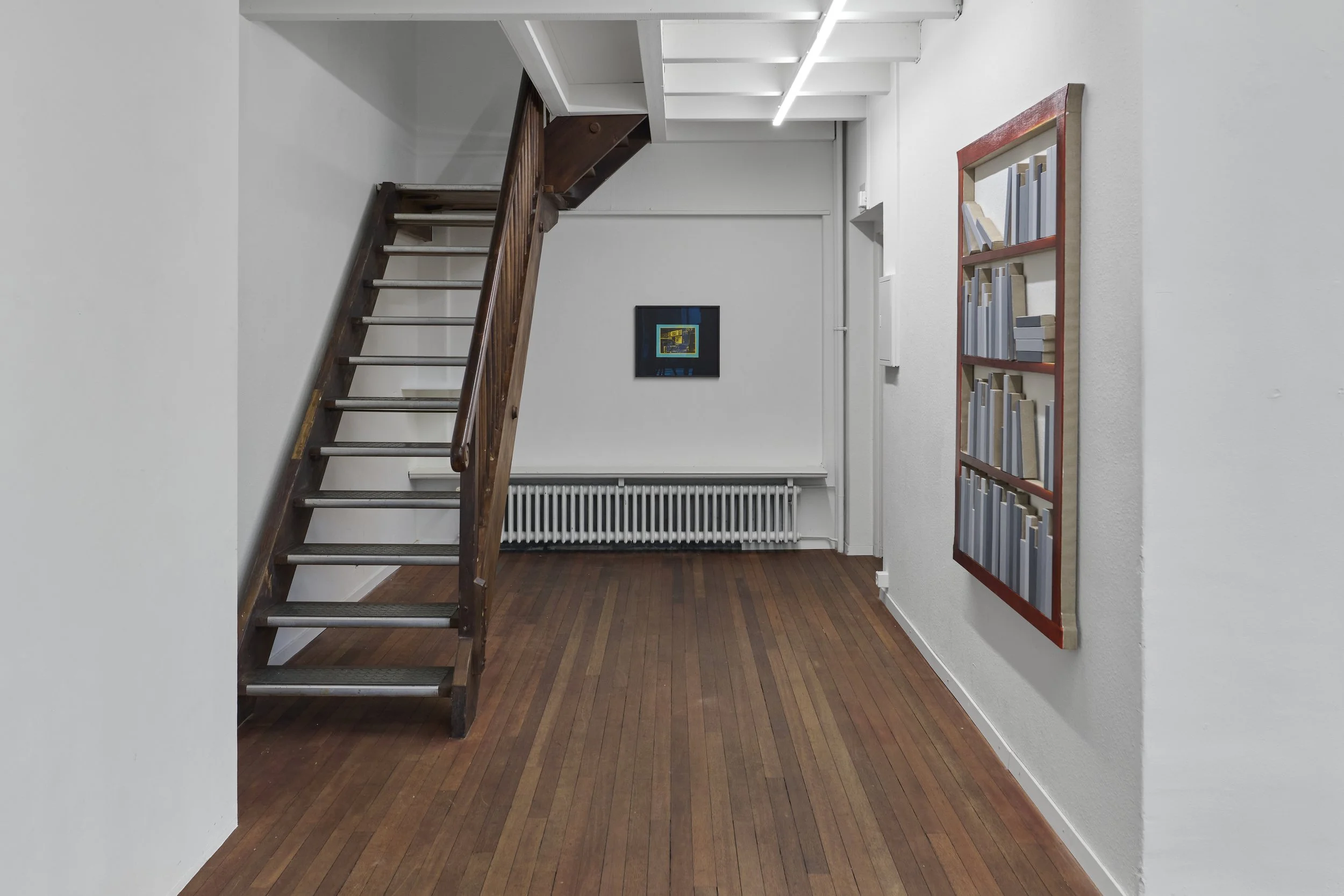
In contrast to these federal interiors, Jane Dickson, a nocturnal explorer of seedy places often reserved for men, visits the still-infamous Times Square of the 1980s before its Disneyfication. Her painting Adult Books (1981) contrasts with the hushed and introverted homosexuality of the men mentioned above. It would hardly be surprising if these three politically correct men had frequented the gay peep shows spreading behind the facades Dickson paints. Both a documentarian and a painter of marginality, her work overturns notions of servitude and secrecy by embracing the more shady aspects of 44th Street. A close friend of Nan Goldin, she embraced an uninhibited sexuality and appropriated masculine codes, suggesting their hypocrisy.
In Courtesy, private space is not a refuge but an exhibition space. Interiors, receptions, materials, and protocols are not a matter of personal taste: they organize a regime of visibility. In The Queen of America Goes to Washington City (1997), Lauren Berlant showed how the intimate sphere becomes a theater of emotional citizenship: the nation performs itself through domestic affects, sentimental narratives, and staged authenticity. Power infiltrates everyday life not only through the law, but through the decor, the language, and the scenography of leaders. The setting does not distract. It governs, and intimacy becomes pedagogy. This absorption is not innocent. Already in The Silent Baroque (1992), C.S. Leigh’s maximalist show curated for Thaddaeus Ropac, the work of art appeared as if in a neo-baroque, capitalist, and scopic impulse, dissecting the pieces, particularly American ones, as transactional commodities, goods, and signs of added value on which hegemonies feed. The camp itself, ironic or unintentional, was integrated into it as an additional ornament.
The exhibition does not propose a simplistic opposition between good and bad taste. Rather, it observes how elegance functions as a technology of hierarchy: how an interior becomes a device of respectability, how dependence is disguised as distinction. To continue with a semantic reading, the word elite refers to both excellence and exclusivity. It evokes competence as much as exclusion. Today, it also serves as a rhetorical scarecrow for powers that denounce differences while consolidating their own privileges. Courtesy stands precisely in this ambiguous zone.
These works and archival fragments from the 1940s, ‘50s, ‘80s, ‘90s, ‘00s, and 2026 respond to a dramaturgy of excess. Art, like interior architecture, does not simply describe a sensibility but a claim to reign. Courtesy means permission, credit, debt. It allows access without abolishing the gap. There is no better way to dominate than by giving thanks.
– Pierre-Alexandre Mateos
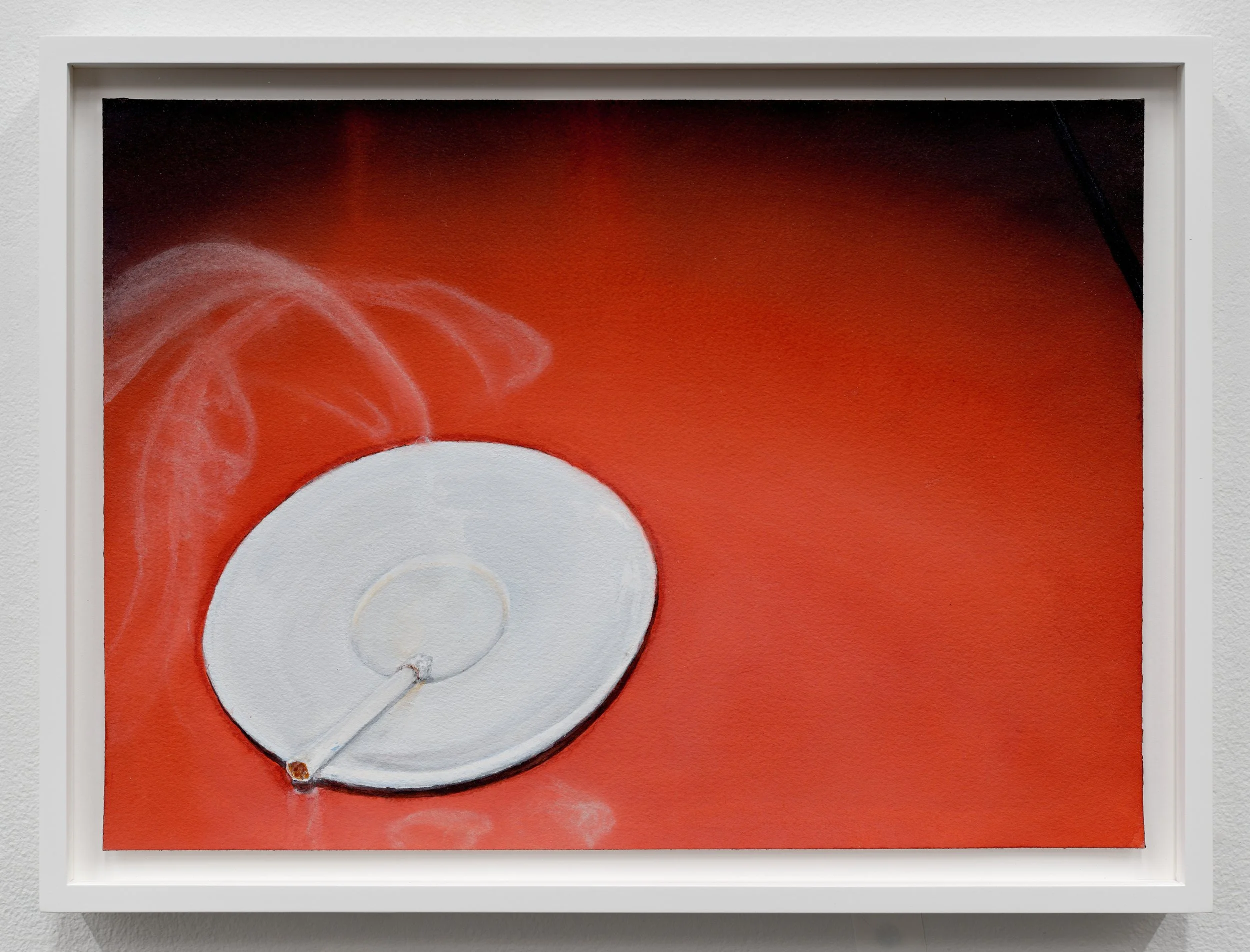
Dike Blair Untitled, 2001 Gouache on paper 25 x 35 cm
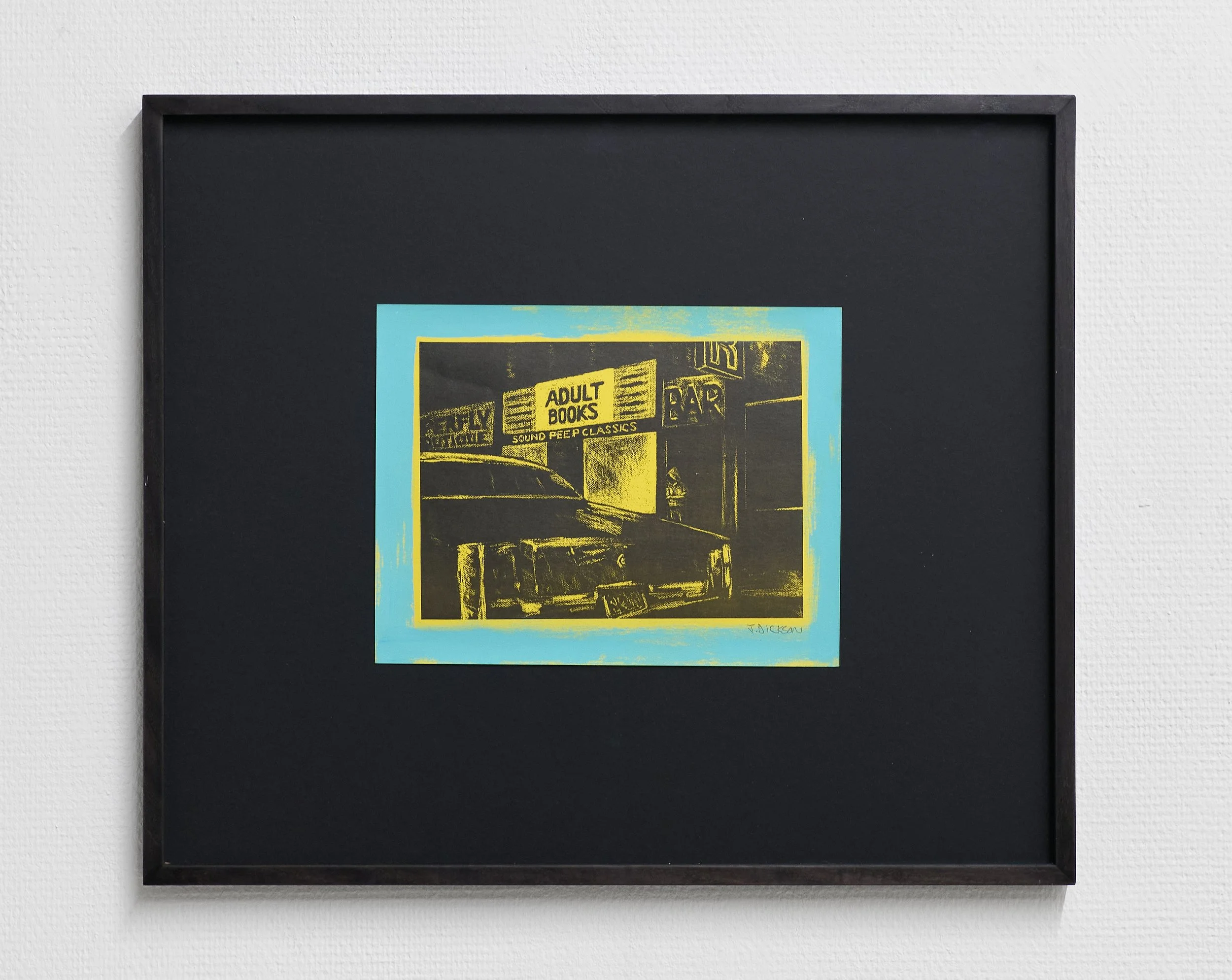
Jane Dickson Adult Books, 1980 Acrylic and Xerox 22 x 80 cm
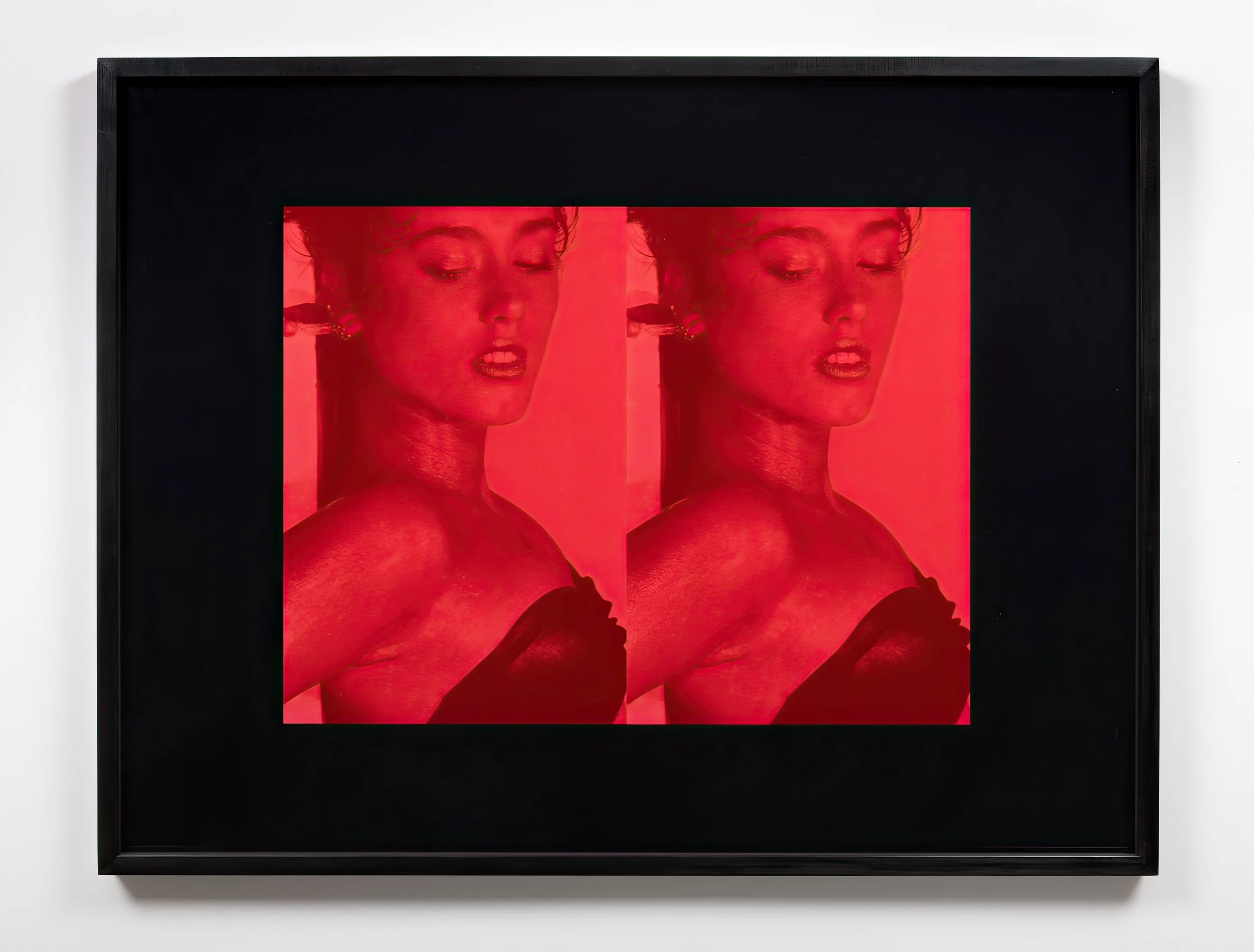
Vikky Alexander Magenta St. Sebastian, 1982 Archival inkjet print, tinted Plexiglas overlay 99.1 x 129.5 cm
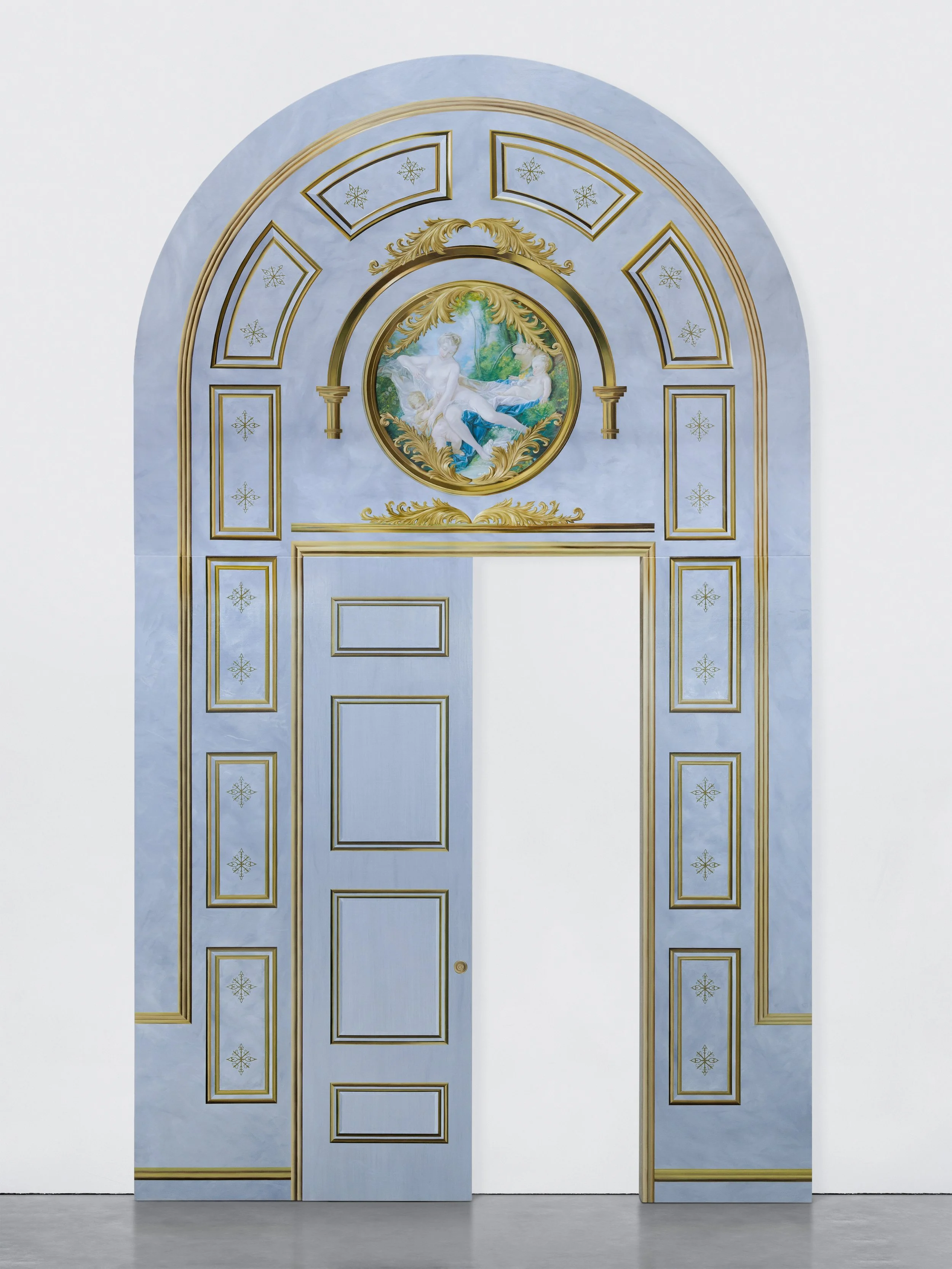
Marius Steiger Door (Consoling Love) Oil and acrylic on linen 410 x 240 x 4.5 cm
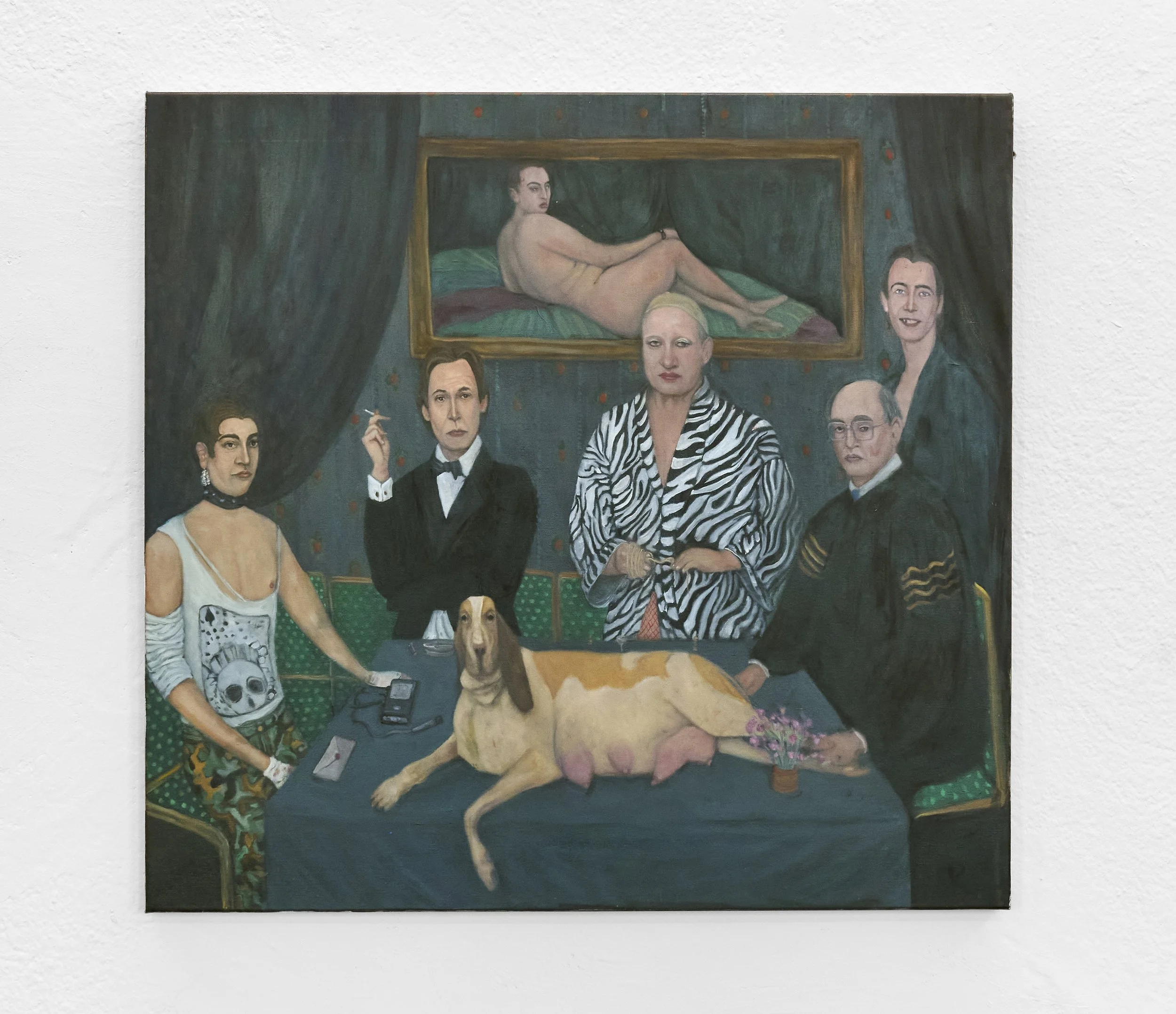
Joseph Geagan Lunch Club, 2026 Oil on canvas 91 x 97 x 3 cm
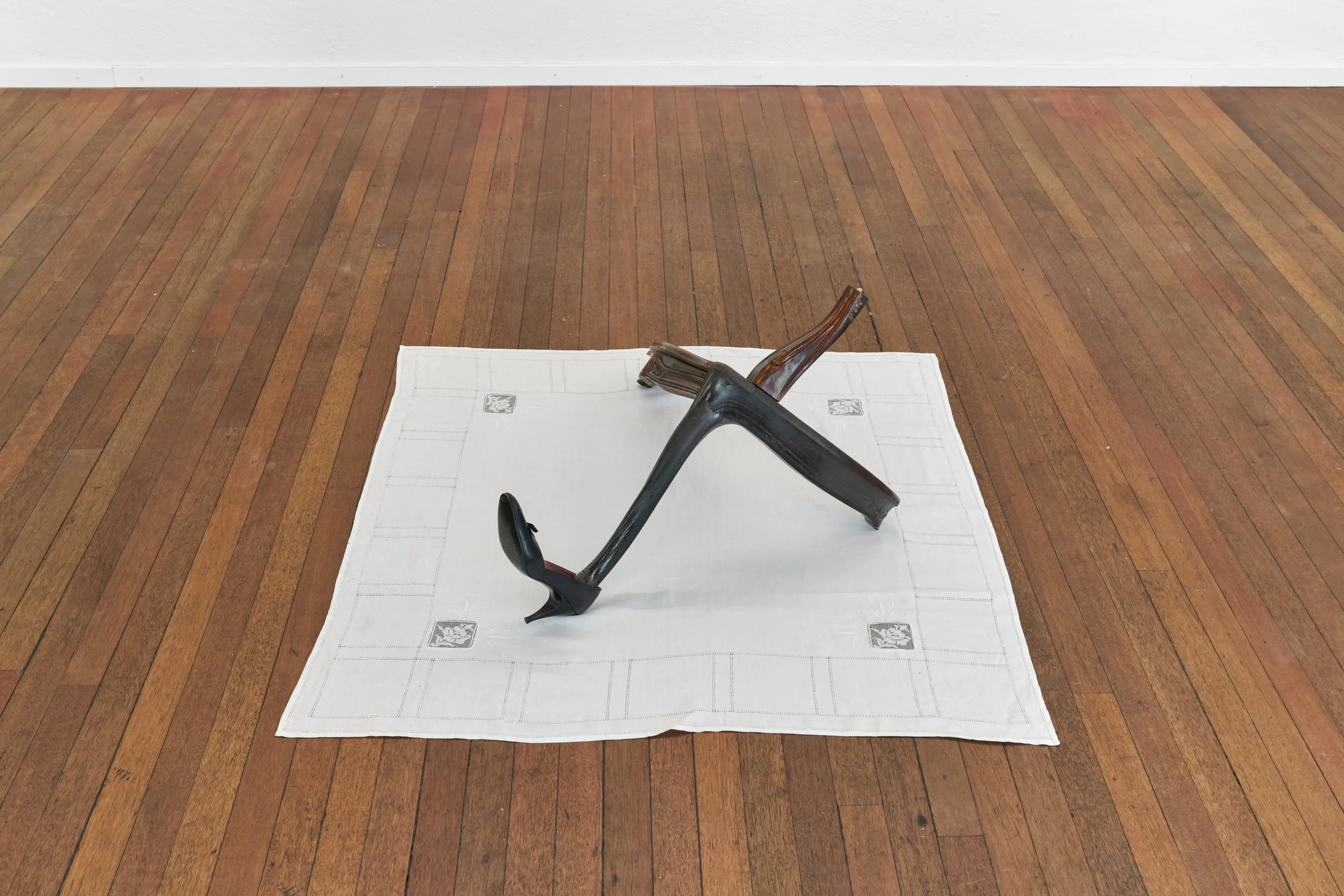
Christopher Gambino Famous Vivian, 2026 Chair, stockings, resin, shoe, tablecloth 107 x 107 x 61 cm