Art Basel Statements
Mónica Mays
Oasis Mini Hollywood
15 – 21 June 2026 | Messe, Basel | Booth M10, Galleries Sector, Hall 2.1
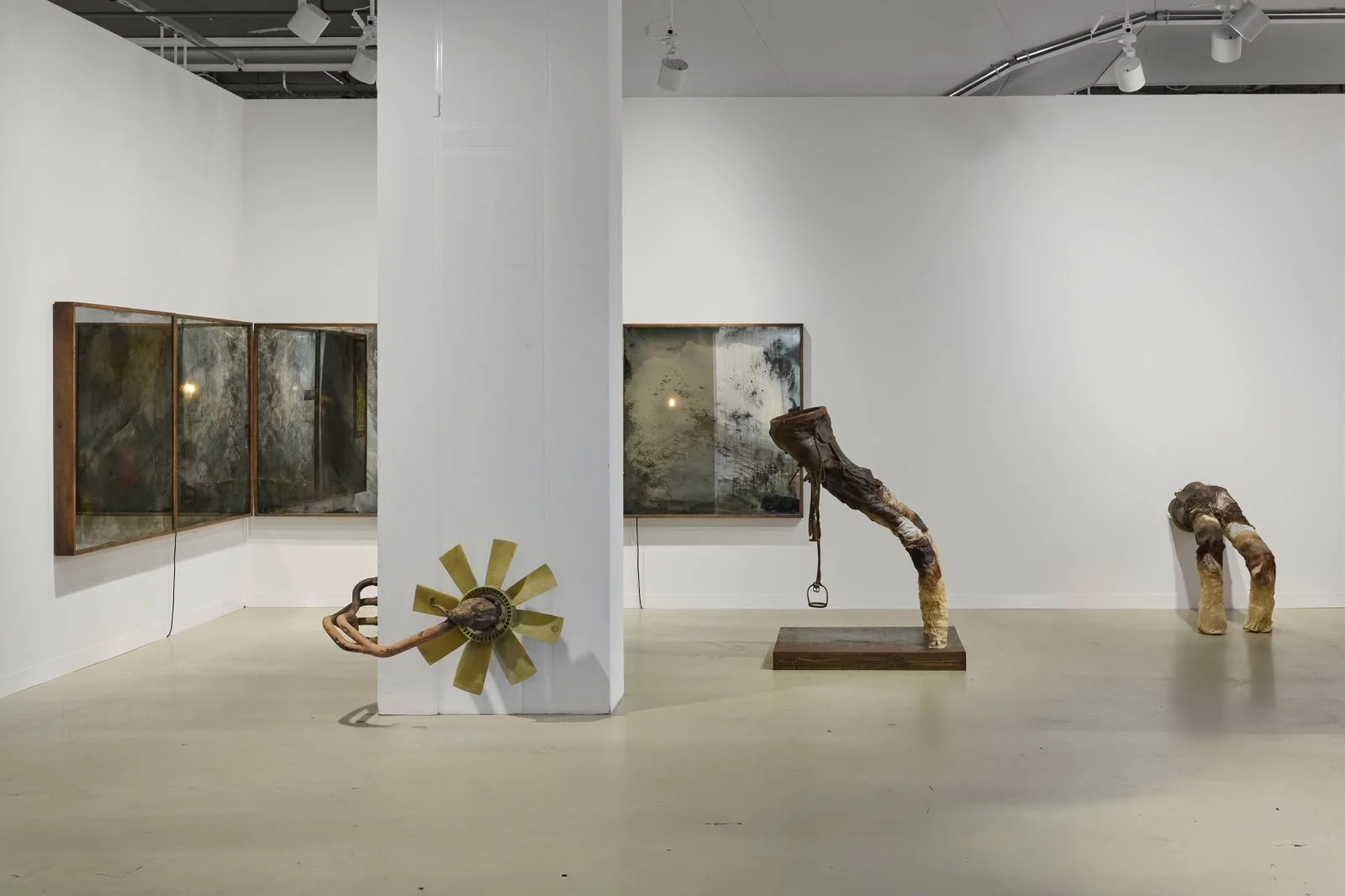
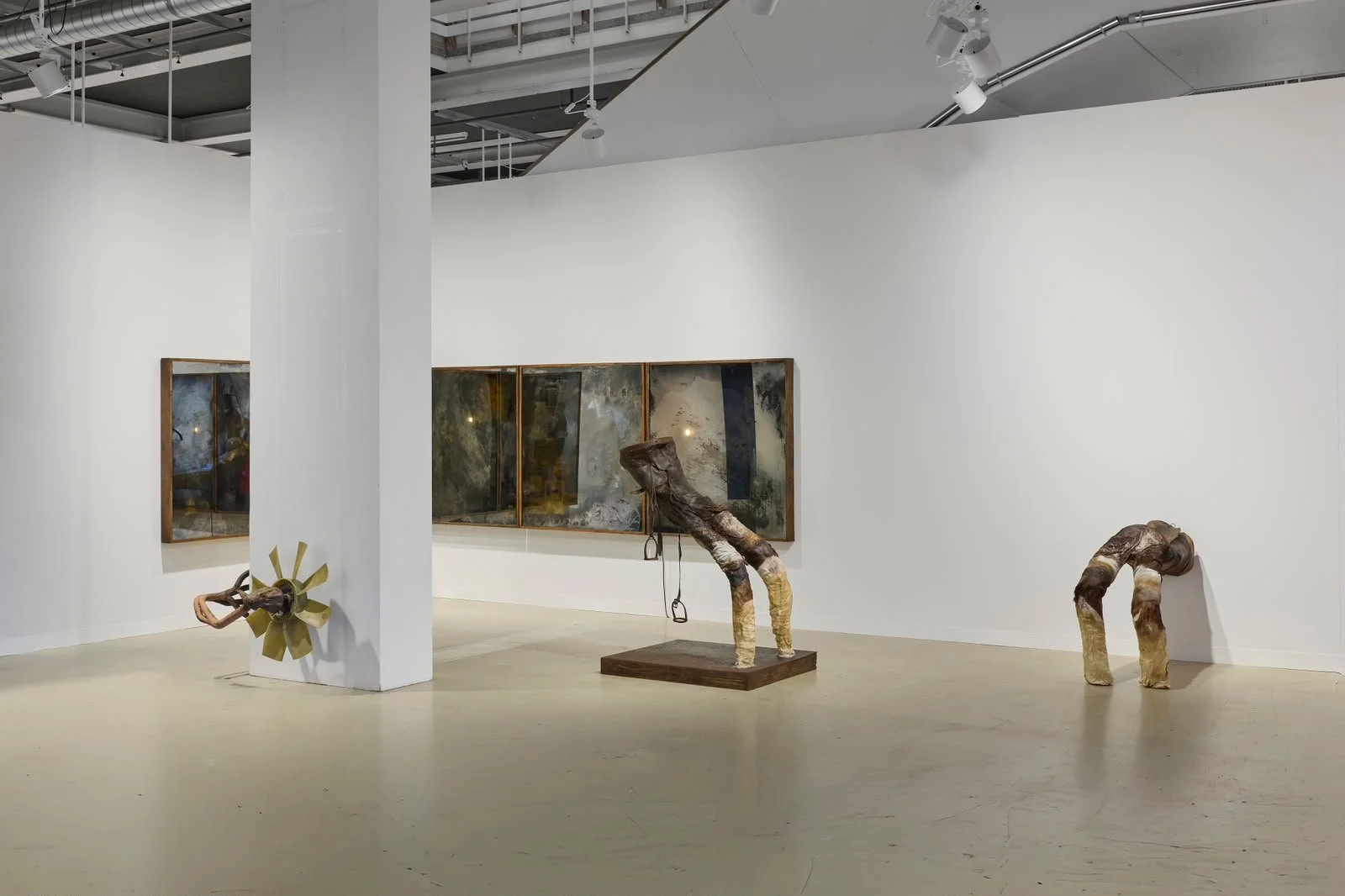
In Oasis Mini Hollywood, Mónica Mays approaches the Western not as a historical genre but as an ambivalent myth. Rather than examining the history of the genre itself, the project investigates the mechanisms through which its imagery has been constructed, circulated, and repeatedly reanimated across different geographies, industries, and media. The Western emerges not as a stable history but as a cultural fiction whose heroes, landscapes, and narratives continue to shape contemporary ideas of freedom, masculinity, power, and desire.
The figure of the cowboy itself is the product of a long chain of translations. Rooted in Arab and Iberian equestrian traditions, transformed through the ranching cultures of New Spain and the Mexican vaquero, it was later reformulated by Hollywood into the heroic American frontiersman and subsequently re-exported worldwide. Decades later, these images returned to Spain in the form of spaghetti westerns filmed in the deserts of Almería, where Mediterranean landscapes performed Arizona and local extras acted a fantasy of the American West. The cowboy thus appears less as a historical figure than as a circulating image: continuously reproduced, displaced, and reconstructed.
The project focuses on the role of moving images in this process. Emerging alongside photography, cinema, and mass entertainment, the Western did not simply document the frontier but helped construct one of the twentieth century's most enduring cultural fictions. Through repetition and spectacle, complex histories of colonization, labor, territorial expansion, and violence were transformed into narratives of heroic individualism and masculine self-reliance. The cowboy became less a historical subject than a cinematic archetype: a body assembled through costume, posture, gesture, and endless reproduction. Many of these images continue to shape contemporary fantasies of identity and power not because they accurately represent history, but because they successfully produce myths through which history itself is imagined.
The sculptures presented in the booth examine this process through material transformation. Saddles become torsos, corsets, and prosthetic bodies. Instruments once designed to command animals become anatomy itself, collapsing the distinction between rider and ridden. Elsewhere, a truck fan and exhaust pipe converge into a form that recalls both a spur and a propulsion system, linking equestrian and industrial regimes of movement. The horse and the combustion engine appear not as opposites but as successive technologies through which bodies, goods, and fantasies circulate.
Throughout the installation, chemically aged mirrors contain embedded archival photographs, toys, and cinematic fragments gathered during the artist's research. Produced through a silver nitrate process associated with early photography, these surfaces operate less as mirrors than as unstable image fields. Fragments emerge and disappear beneath layers of tarnished reflection, placing viewers within a space where projection, memory, and spectacle become inseparable.
Rather than asking what the Western was, Mays asks how it continues to be staged. The installation approaches the genre as an image-producing apparatus whose fictions persist long after their original conditions have disappeared, circulating through cinema, tourism, amusement, and popular culture as a mythology still actively shaping the present.
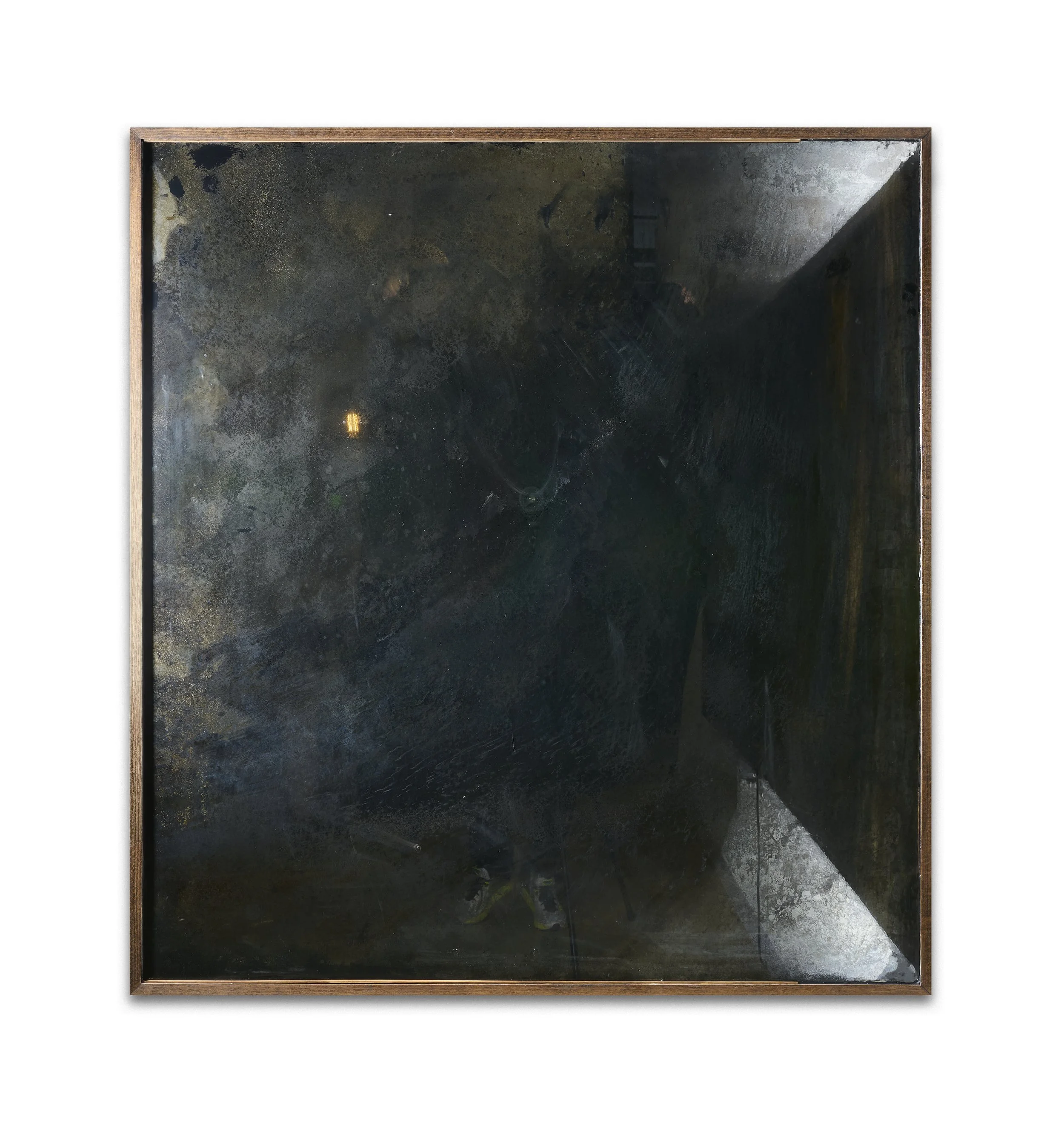
Mónica Mays Vanity, 2026 silver nitrate mirror, miscellaneous objects, archival images, lamp, artist frame 133 x 123 x 10 cm
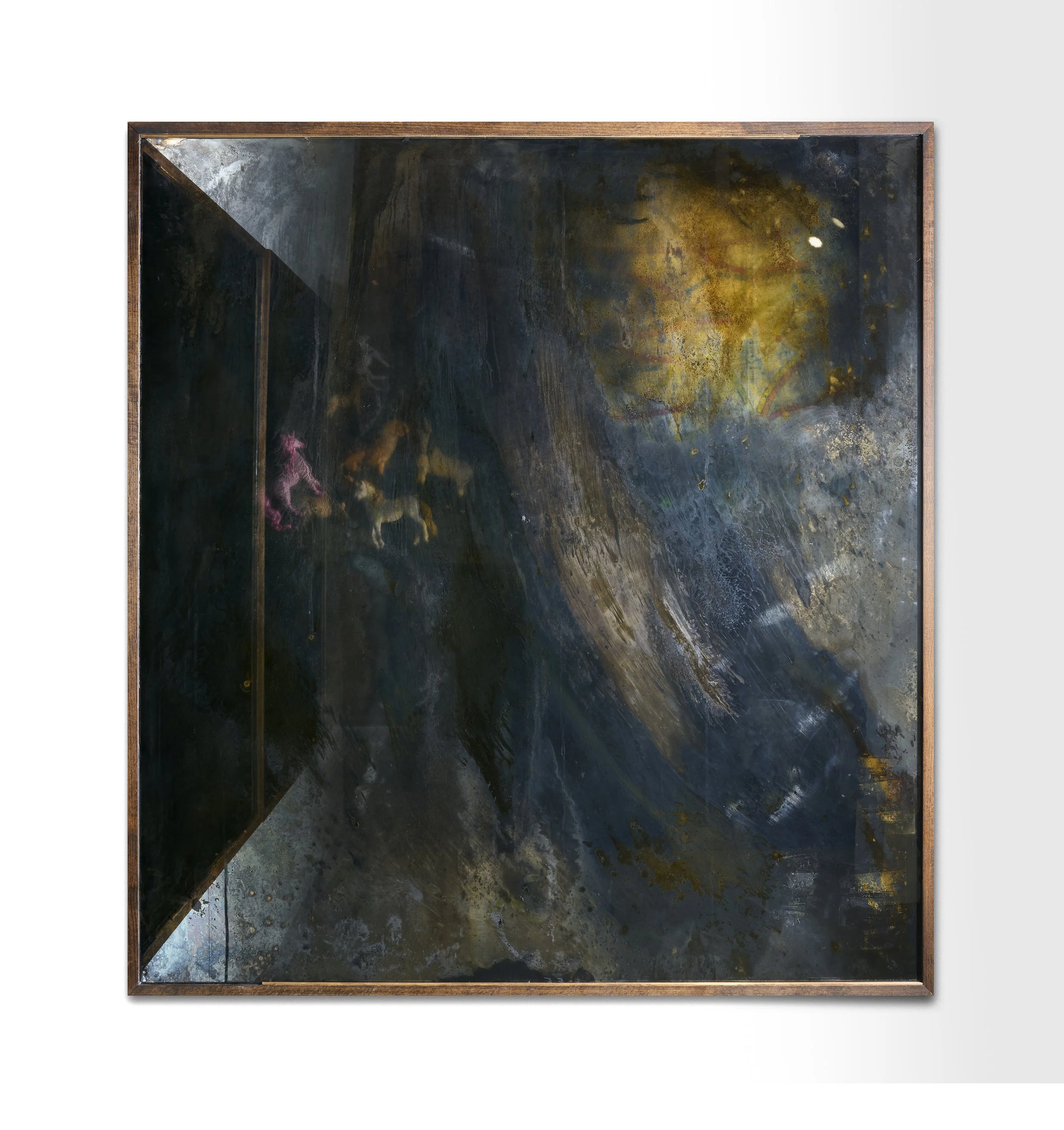
Mónica Mays Vanity, 2026 silver nitrate mirror, miscellaneous objects, archival images, artist frame 133 x 123 x 10 cm