Art Basel Unlimited
Marius Steiger
Five Cars (Terror Management)
15 – 21 June 2026 | Messe, Basel | Booth U12, Unlimited Sector, Hall 1
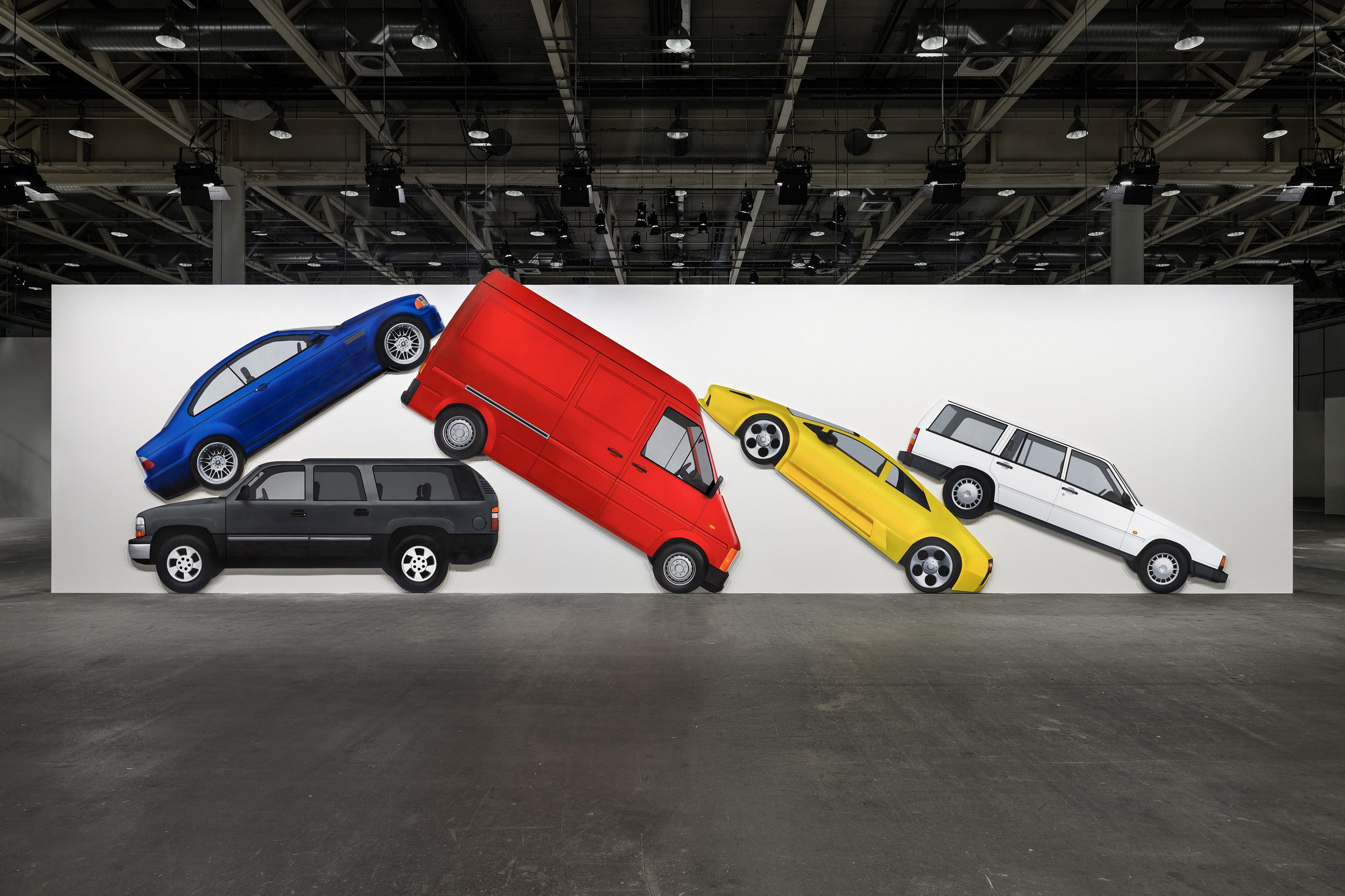
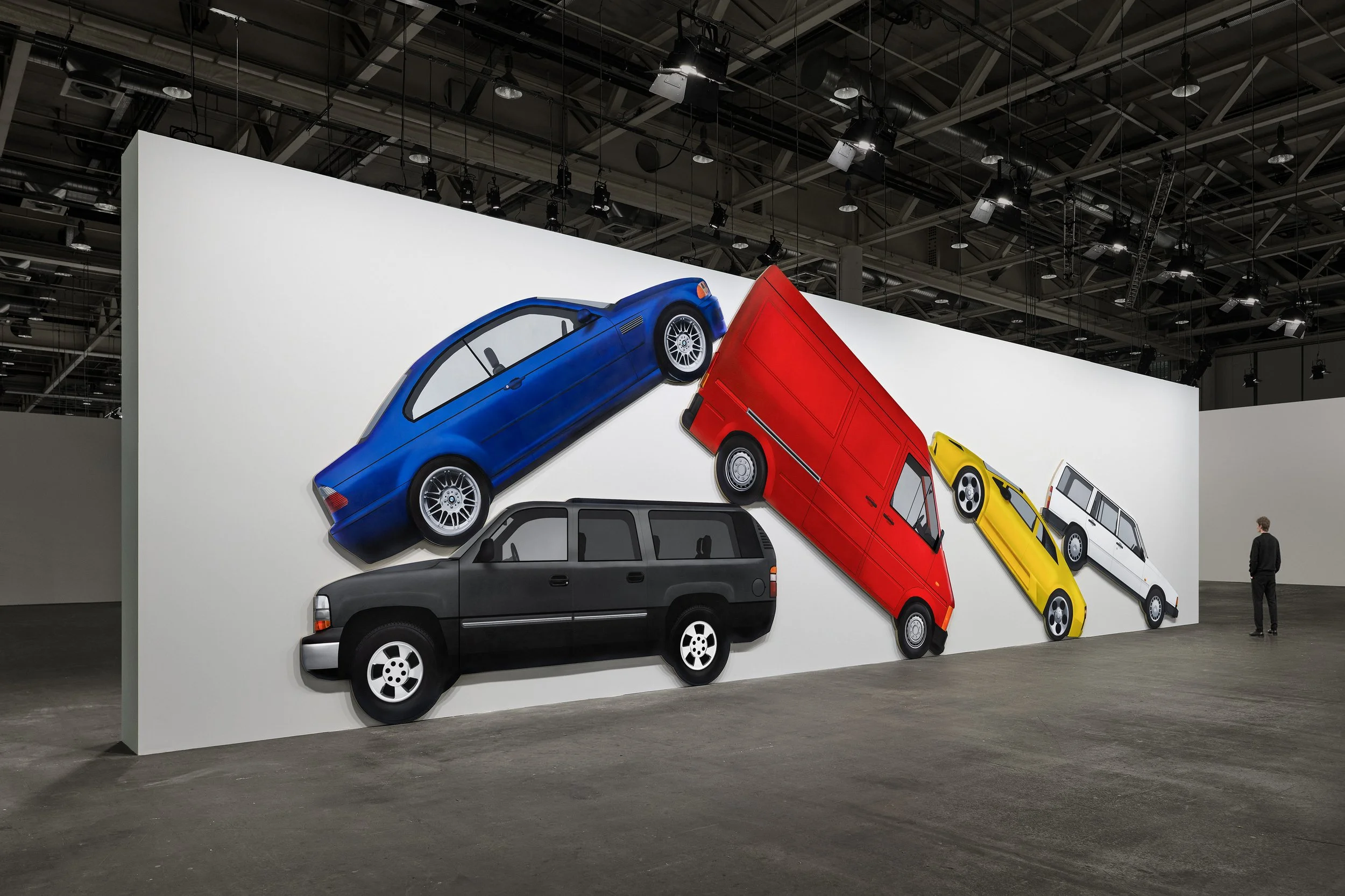
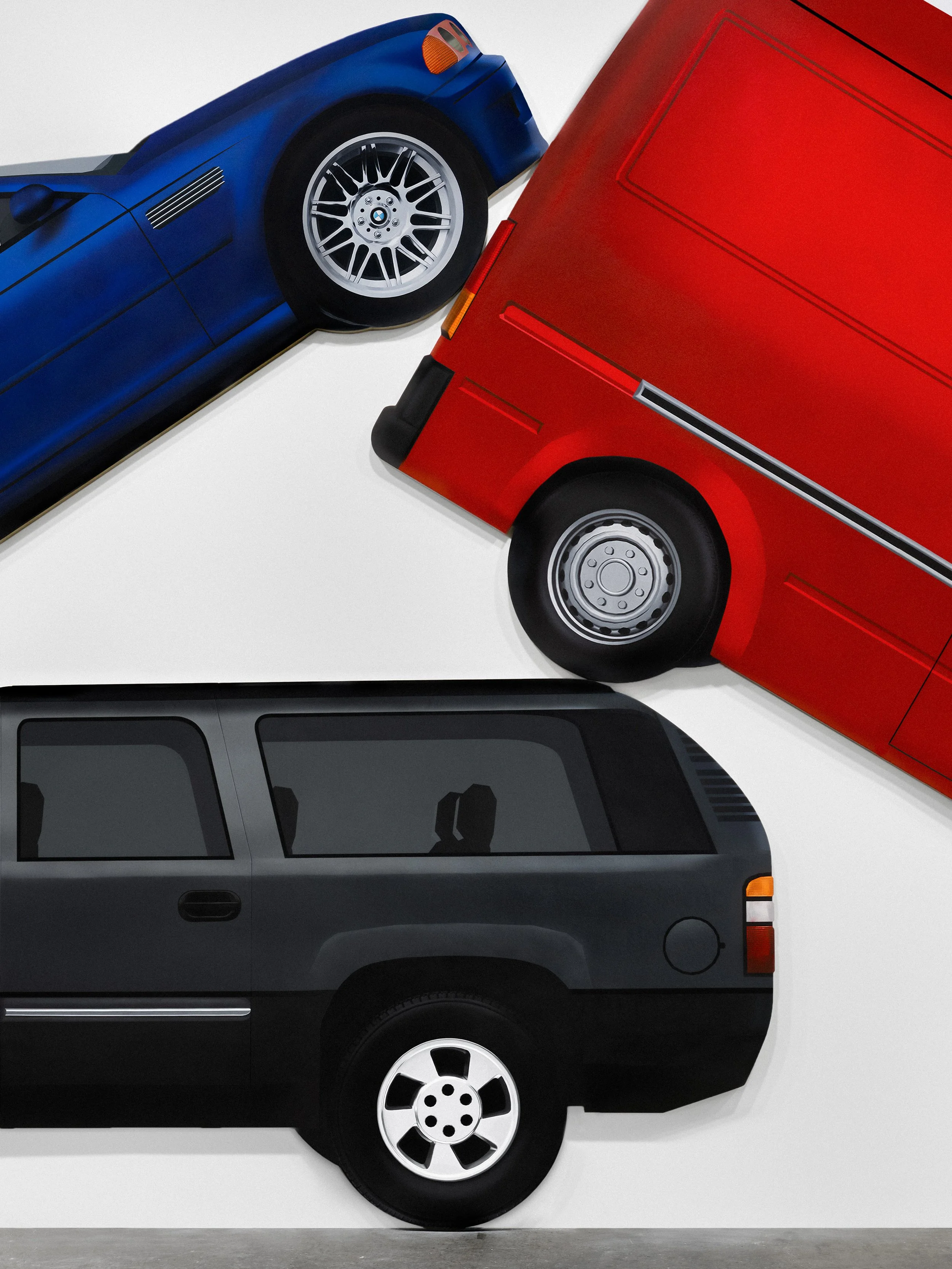
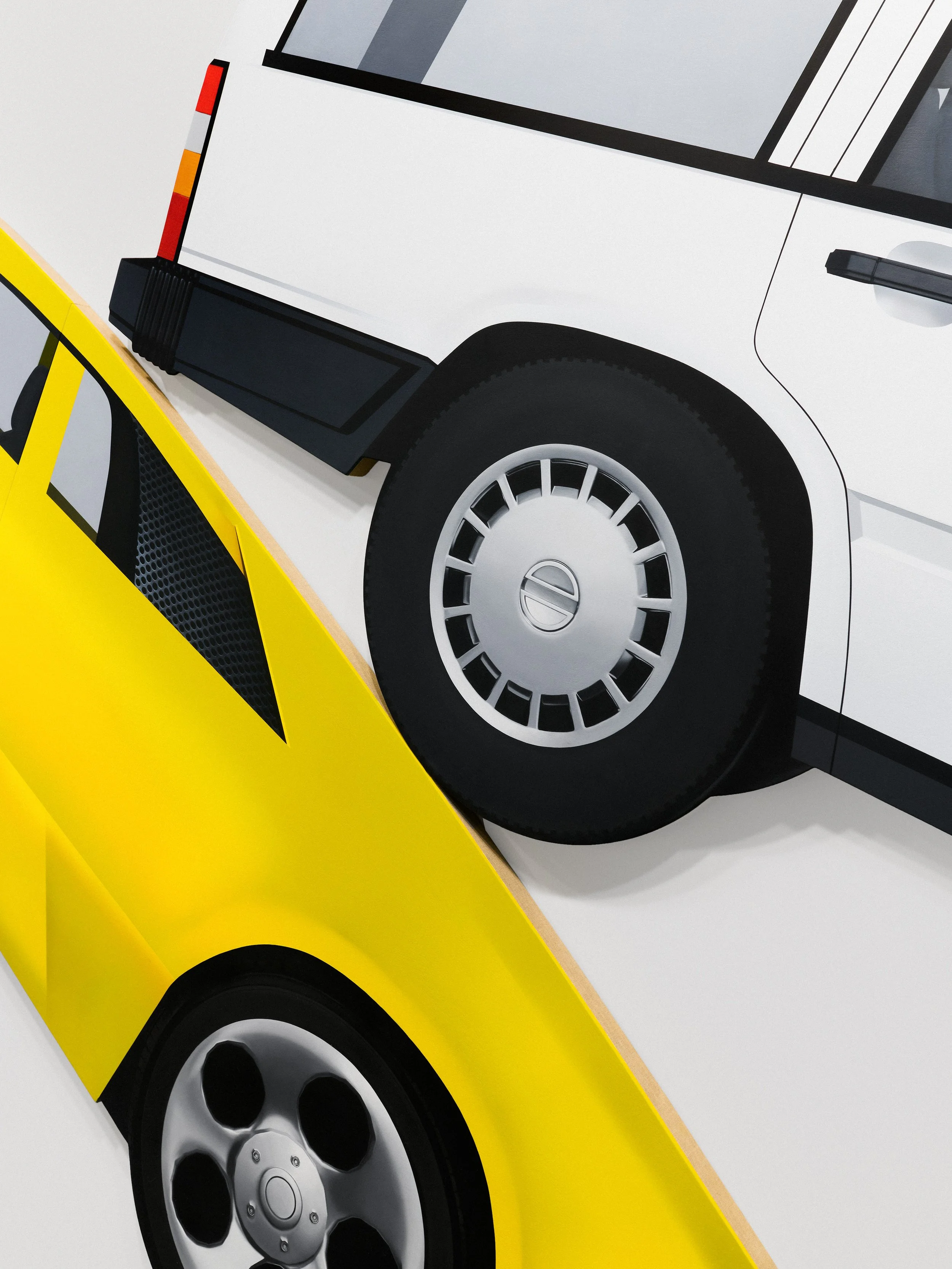
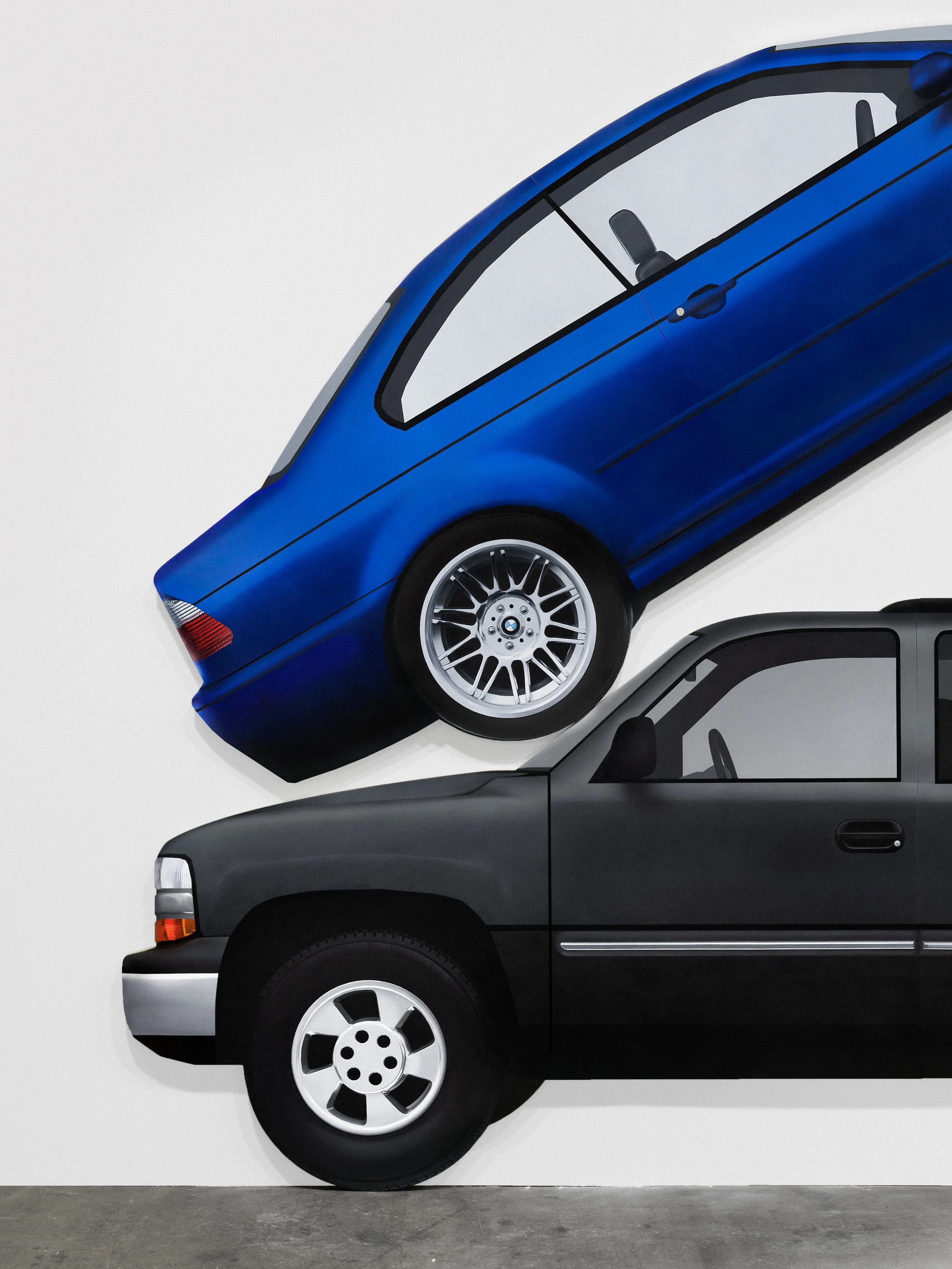
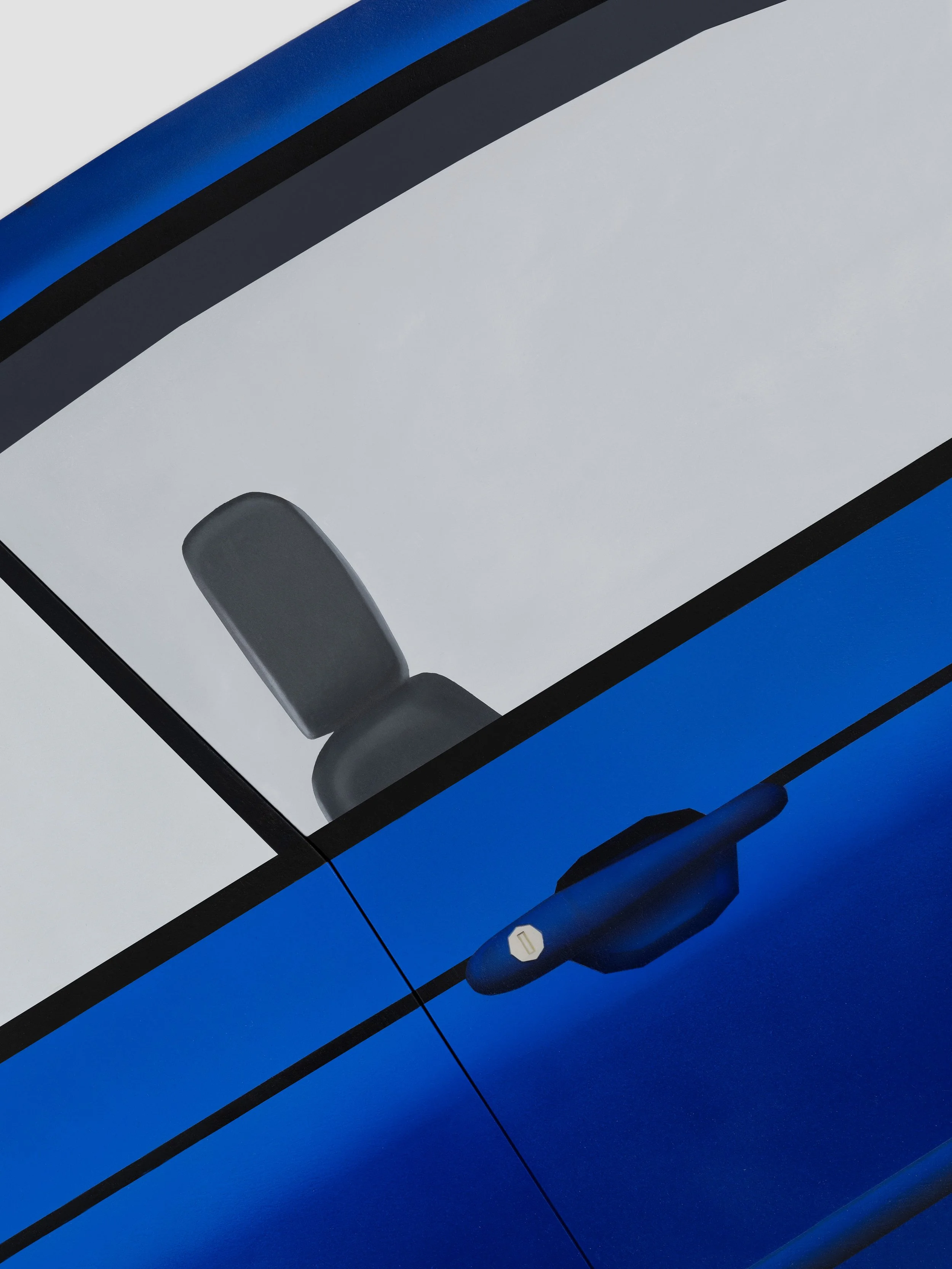
Five Cars (Terror Management), 2026, is a monumental wall work composed of life-sized shaped paintings of cars, locked into a tense, cantilevered formation. The work stages mobility as a condition of contemporary life: compressed, fragmented, and held in suspension. Installed at full scale, the vehicles appear caught between traffic jam and monument. What promises speed, autonomy, and progress reveals itself as congestion, repetition, and display, reflecting a society that circulates endlessly through images, consumption, and representation.
The work is not about specific brands or models, but about the roles cars play and their psychological charge. Rooted in still life and vanitas, it treats the automobile less as a means of transport than as an object of desire, status, and projection. Drawing on Terror Management Theory, Steiger approaches the car as a symbolic buffer: an object through which people project aspiration, identity, protection, and a sense of meaning in the face of mortality.
Each vehicle carries a distinct set of associations. A large black SUV signals institutional authority and security; a sports coupe performs ambition and visibility; a high-performance sports car conveys spectacle and desire; a station wagon evokes domestic continuity; and the van oscillates between two opposing myths, as an instrument of global logistics and online consumption, and as a romantic emblem of freedom and nomadism. Together, they form a spectrum of cultural ideals, revealing how cars function less as tools than as symbols mediating desire, identity, and permanence.
Presented collectively, the cars form less a celebration of mobility than a critique of it. Immobilized in paint, they reveal the paradox of a society obsessed with movement yet structurally stuck. The promise of individuality dissolves into typology: what appears as personal choice unfolds as a structured field of signs. The work becomes a contemporary vanitas, not of skulls and fruits, but of lifestyle formats monumentalized and held in place.